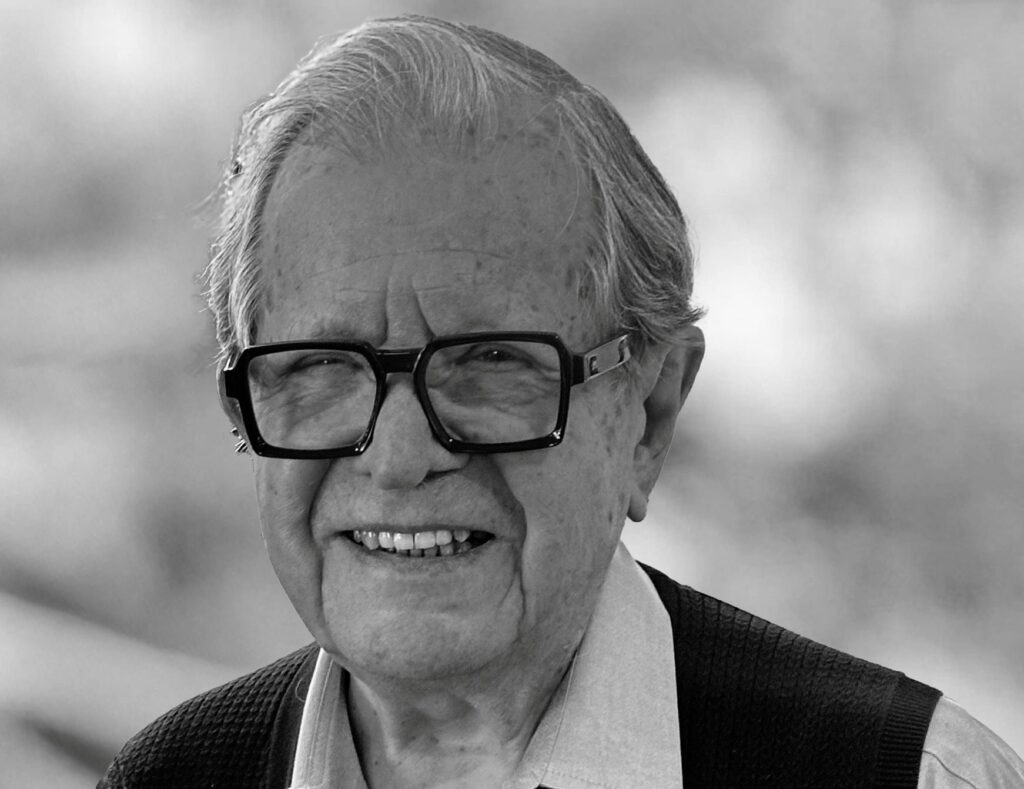
Macario Giraldo
In a very spontaneous way, without thinking, I was the first one that said, I believe in God because I believe in the unconscious. I am not worried about hell or heaven. That doesn’t preoccupy me. That’s one of huge changes through analysis and in my life. I remember a number of the prayers that I learn in Latin. I repeat one of those prayers like a mantra, but it is never now a dogma.
Elizabeth Rovere
Welcome to Wonderstruck, where we explore mystery, meaning and the ineffable. Today I’m honored to bring you a conversation with Macario Giraldo, a distinguished Lacanian psychoanalyst and a pioneer in applying Lacan to group therapy. His life has stretched from rural Colombia to the heart of Lacanian psychoanalysis in Europe and the United States. An analysand of Colette Soler, and through her, Jacques Lacan, Macario’s work brings language, desire and the pulse of the Real alive within the context of group therapy and our modern day world. I hope this conversation stirs something, a glimmer perhaps, into the wild terrain that is within you. I’m Elizabeth Rovere, a clinical psychologist, a yoga teacher, and a pilgrim in the realms of wonder and awe. This is Wonderstruck, a podcast about awe in all its forms, the beautiful, the humbling, and even the uncanny. Together with thinkers and seekers, we explore the moments that undo us and awaken us to the very mystery of being. Well, hi Macario, and welcome to Wonderstruck. And thank you so much for being on the podcast. Really appreciate it and it’s wonderful to be here in your home here in Arlington, Virginia. So I thought it would be fun and interesting to talk to you about a bit about your life history, how you got to group and Lacan and, you know, people in the United States or even probably in Europe think of Lacan and they’re like, Lacan, like, who is this guy? Some obscure French analyst and philosopher. And yet there’s a way in which it’s profoundly meaningful and applicable in life and how we understand life and our very being, an experience of being. So it’s pretty cool that you were analyzed by Colette Soler, who was analyzed by Jacques Lacan. Like, there’s a cool lineage there. How did this become such a passion for you?
Macario Giraldo
The short answer to that question is that I really don’t know. The next answer is that it is something that evolved from step to step in a sort of very natural way. Things come to me and for some reason I catch them. I know how to catch them. There’s something in me since I was a little kid.
Elizabeth Rovere
You recognize them coming to you?
Macario Giraldo
Yeah. You have read in my memoir that story. It’s a very central story in my life. The story when one of my brothers, one of my favorite brothers, who often wanted me to go to the coffee farm and help in the farm. But so it happens that one of those days, it was school day, and my brother said, we have a lot of work. I want you to come. And that’s when my sister tells me that I answer to him, “I was born for greater things”. And I was about 7. Interesting. I never remember that phrase. Repression was profound on that phrase for a good reason. I assume greatly that I got a message from my mother. And I think from very early she sort of intuitively communicated to me the wish for education. And she was always very supportive of that.
Elizabeth Rovere
So the story of Picasso is a great little vignette of explaining some of these concepts. So I was wondering if you would share. You know, what I’m talking about.
Macario Giraldo
Not sure right now. Tell me.
Elizabeth Rovere
Okay, so there’s the story of Picasso, who was a contemporary of Lacan.
Macario Giraldo
Yes.
Elizabeth Rovere
And apparently Picasso’s mother, who thought that he was destined for great things.
Macario Giraldo
That’s right.
Elizabeth Rovere
She says, well, my son Picasso, if you’re a soldier, of course you’re going to be a general. If you are a… If you’re interested in the church and you want to be a priest, you will be the Pope.
Macario Giraldo
Yes.
Elizabeth Rovere
And then Picasso said, well, you know, I became a painter, and then I became Picasso.
Macario Giraldo
Yes.
Elizabeth Rovere
And I just think it’s an interesting example.
Macario Giraldo
It’s a beautiful little story. Picasso grows up with this message from the mother, which basically tells him, no matter what, you’re going to be great. Now, what does Picasso say? He quotes his mother, but then he quotes himself.
Elizabeth Rovere
Yeah.
Macario Giraldo
He says, instead, he said, it’s an important. Instead, I was a painter and I became Picasso.
Elizabeth Rovere
Yes.
Macario Giraldo
And this is exactly a central concept in Lacanian psychoanalysis that is called subject rectification, meaning taking the desire of the other and how that desire has influenced me, incarnated me, and to what extent I make that desire of the other and make it my own desire. And certainly he made the desire of the mother his desire. He became famous. Basically, his life says, you were right, Mom. You gave me the right message. That’s why I was saying that in my history, my mother gave me the sense that I could be the kid that could leave the little farm and study and become what I had become. So at some level, I took that message. How did she do it? I don’t know exactly, but I have no doubt that that’s how I became who I am.
Elizabeth Rovere
Like, isn’t there a way to. Let’s say, your mother. Why did she say, you know, you’re destined for big things? Why did she think that? Like, she. She saw that. Let’s say she saw that in you. She recognized something in you.
Macario Giraldo
You know, there’s another little story that I mentioned in my memoir, because it has always intrigued me, and that is very often, age 4 or 5 or 6 or 7, I like to roam in the farm by myself often. And I would sit, and then I would start kind of trying to look at myself, almost kind of wondering if I could have a mirror of myself. And as I began to do that, I would get scared and will run home. See, at some level, I was trying to make sense of myself.
Elizabeth Rovere
Yes.
Macario Giraldo
And my fear was, you don’t make sense of yourself by yourself. You need the other.
Elizabeth Rovere
Yeah.
Macario Giraldo
This is how we all make sense of ourselves.
Elizabeth Rovere
Someone has to see you. So you see yourself.
Macario Giraldo
Absolutely. You know, it’s central. You know, that’s. That’s who we are as humans, you know, and that is connected to when I go into analysis with Marianne Goldberger, and one night during. I have this dream, eight plus one. That was the dream. So I go to Marianne the following day, and I said, I had this strange dream. I had no idea who that is. Eight plus one. She was an excellent analyst. She said, well, let’s see what. What comes. Stay with it. And, of course, I hadn’t thought that. But that’s my number in the children. Number nine. I’m the ninth of ten children.
Elizabeth Rovere
Eight plus one.
Macario Giraldo
Eight plus one. There it was. And so that’s where in my, in my memoir, I bring the dialogue between plus one and minus one, because the plus one is this unique place I acquired in my family with all kinds of wonderful things. The other side of that is full of profound losses.
Elizabeth Rovere
Yes.
Macario Giraldo
That’s the minus one. And so that has been the story of my life and what I have worked through in analysis. And. And in a certain sense, that’s a metaphor for the life of anybody.
Elizabeth Rovere
Yes. So that. But there’s something that’s very meaningful about that, I think, you know, in another dialogue at one point with someone on Wonderstruck, we talked about the presence of absence.
Macario Giraldo
Yes.
Elizabeth Rovere
And that makes me think of the plus one and the minus one.
Macario Giraldo
Absolutely.
Elizabeth Rovere
And, you know, like, I guess I feel like it’s why I’m thinking, talking about it or recognizing this, right now, in this moment with you, is that. That, like you said, it’s a metaphor for our very being and life.
Macario Giraldo
Absolutely.
Elizabeth Rovere
The presence and absence, the loss and. And how when someone is gone, forced gone, or there’s still. There’s a presence. There’s still. There’s still something very meaningful that’s alive.
Macario Giraldo
Yes.
Elizabeth Rovere
Throughout the life of the others that they were impacted by.
Macario Giraldo
Right. By the way those two words, presence and absence and loss and trauma, they are central in the infant observation of Freud, of his grandson. It’s one of Freud’s grandchildren from his daughter that died, was a big loss for Freud. And he had this kind of. We call it in Spanish, yo-yo. So he would pick it up and throw it and say “Fort”, and then pick it up, “Da”, Fort-Da. Freud becomes very curious. He says, what’s this kid doing? And then he notices that this kid tends to start playing this game when the mother is leaving the room and Freud begins to connect it to her. He loses the mother and then he does something to deal with that. Lacan picks up that and he takes it to even a greater. And basically what Lacan says is, here we have this kid handling presence and absence. Absence so central for the child begins to separate, to establish a boundary between himself and the other. And then Lacan says this Fort-Da is now, because the kid was playing with this object, so Lacan says, how important these two signifiers Fort-Da And the object on which he plays. And then Lacan says, here we have the constitution of the subject, the subject and the object. And then he asks at this moment, when this child is saying that this object that gets detached is himself, that gets lost in the mother while remaining a part of himself. So you have the mother and himself through these basic signifiers exemplified in the object. This is a beautiful summary of how Lacan takes this from Freud and really gives it a tremendous central position in his theory.
Elizabeth Rovere
About presence and absence.
Macario Giraldo
Yeah. And, you know, we could say presence is plus one and absence is minus one. In my.
Elizabeth Rovere
Yes.
Macario Giraldo
In my way of talking about it.
Elizabeth Rovere
I mean, it’s. And it’s. You know, it’s literal and it’s metaphorical.
Macario Giraldo
Yes.
Elizabeth Rovere
And it, you know, it’s like thinking of, like, what is hidden and then what is found. And it reminds me of that. Well, I’d love for you to elaborate on it. The. You know, when Winnicott says. Winnicott, for anyone listening, is also a famous analyst, like, a little bit post Freud. And when he says there’s something about the joy of hiding and the disaster not to be found.
Macario Giraldo
Exactly. That’s beautiful in Winnicott.
Elizabeth Rovere
I mean, I was wondering about this. When I think about how children like to play hide and seek, the excitement and the thrill of it and like, you know, like they’re hiding. It’s like, you know, it’s like, how many night. Okay, here we go again. We’re, you know, it’s like we have to go find, you know, Astara before she goes. Like, where did she go? And then when you find her under the covers, she’s like so excited.
Macario Giraldo
Fundamental. Yeah, fundamental that gaming kids, because again, the kid has to establish lack.
Elizabeth Rovere
Yeah.
Macario Giraldo
Absence to find herself, but then needs to stay connected to the other. So I hide, but find me. Now, if he or she doesn’t find me now, that’s a problem.
Elizabeth Rovere
That’s a problem.
Macario Giraldo
That’s a problem. But if he or she finds me, then this is the game of life that has started. The object relations. That’s what object relation is, right?
Elizabeth Rovere
Yeah, which is a great example of object relations when it’s not so abstracted as a theory.
Macario Giraldo
Yeah, absolutely.
Elizabeth Rovere
Yeah. So as you were telling this, my mind was also associating to a couple of things. I was like, okay, what about this? How does this relate to Macario? Like, how does this relate to you in the sense of, you know, like you went when you were a kid and you started going to school and you started to work with this, schooled by this, joining this Christian Brotherhood that was French La Salle Christian Brotherhood in Colombia.
Macario Giraldo
Yeah.
Elizabeth Rovere
And yet. And then, you know, of course you got a Fulbright and you came to the United States and you talk about there’s a lot of loss or lack, loss. Right. Like being separated from your family.
Macario Giraldo
Sure.
Elizabeth Rovere
And then being told when you’re in the Christian brotherhood that, you know, well, you’re not going to have a family. You know, you can’t have a family. And you’re like, man, I really want a family. How am I going to deal with this. Kind of coming full circle and like, I’m really interested in group. I’m really interested in group analysis. I’m really interested in this Lacanian analysis pointing to group. Was it a way of kind of working through some of the loss and creating community?
Macario Giraldo
Yeah. All of that is connected. Yeah. Well, of course, being a member of a good group, 10 kids and parents.
Elizabeth Rovere
Yes.
Macario Giraldo
I mean, my memoir, I speak of my mother’s cousin who was a Christian brother. So through her cousin, one of the Christian brothers comes to my home. So then my life from age 10 to age 35 is with the Christian Brothers. Basically, I become from a little monk to a monk. But then this thought in my mind is going to start playing its role. Why can I not have a family?
Elizabeth Rovere
Yeah.
Macario Giraldo
Which obviously is related from losing my family.
Elizabeth Rovere
Yeah.
Macario Giraldo
And from being a member of the world. Right?
Elizabeth Rovere
Yeah.
Macario Giraldo
But I was totally committed, serious about those 25 years.
Elizabeth Rovere
Yeah.
Macario Giraldo
From age 10 to age 35 of my Christian Brothers, I went through the different stages. I made the final vows, as I say there, and I had to be. I had to get a dispensation from the Holy See, from Rome to be able to move out of the order.
Elizabeth Rovere
Yeah.
Macario Giraldo
And that’s when I was here in Washington, and that’s where the migraine headaches, because the change was profound. And I was going to have to disappoint many of my classmates, young Christian brothers who were looking up to me to being one of their leaders and so forth, and so disappointing them was very hard, very difficult. So, as you can see throughout all of this, I am dealing with myself as an individual and with a member of a group in different ways. And so I have to find myself through the group and outside the group, both.
Elizabeth Rovere
Right.
Macario Giraldo
And so taking me to the last stage that you talk about, how did I end up being interested in Lacanian psychoanalysis applied to the group, which, yes. I think my book is the first one written applying Lacanian psychoanalysis to the group. When I started studying Lacan, I read a text of him which is called British Psychiatry and the War and what it is that in 1945, when the Second World War is ending, Lacan goes to England and spent five weeks at the famous hospital in England where group work was being applied to deal with war neurosis. Many of the soldiers that have had all kinds of symptoms from the war and so forth, that’s when Bion and Rickman, the two central figures in that, are doing the great experimental work. And that’s when Bion then writes his famous book, Experiences in Group. Lacan comes there and begins to observe. He writes this article praising so much Bion and Rickman for this extraordinary invention. And he says, this is an example of how England has responded to the war as opposed to how France has been stuck. So when I read that article, I said, wow, this is so interesting. This gives me an idea. See if I can begin to think about writing a short book on how to apply Lacanian psychoanalysis to the group. And the title of my book, The Dialogues in and of the Group: Lacanian Perspectives of the Psychoanalytic Group. Where I try to pay attention in the book, in the different chapters, when I say the dialogues in, we’re talking about the concept of the imaginary in Lacan. It’s the ego to ego dialogue in the group. When I say…
Elizabeth Rovere
Arguably, because I think that might be confusing for people, even some of us psychologists.
Macario Giraldo
Yeah, sure.
Elizabeth Rovere
Like the idea of the dialogue in the group. Right. This kind of dialogue is regular conversation.
Macario Giraldo
Regular conversation. When we meet each other with our family, with our friends and so forth, that is. But that’s basically ego to ego. The subject is not exactly that.
Elizabeth Rovere
The subject is behind.
Macario Giraldo
Yeah. The subject is always connected with lack.
Elizabeth Rovere
Right.
Macario Giraldo
Yeah.
Elizabeth Rovere
With something deeper.
Macario Giraldo
With something deeper and something where the dimension of the symbolic is operating. It is also to some degree, in the imaginary, but the subject in Lacan, the power of the signifiers that have acted on repression to be able to function in life is central.
Elizabeth Rovere
So wait, slow down for a second. So bear with me. Just because I want to make sure people can understand that. So, first of all, like Lacan is famous for saying, the unconscious is structured like a language.
Macario Giraldo
Absolutely. Yes.
Elizabeth Rovere
And that’s what you mean when you say signifier.
Macario Giraldo
Yes.
Elizabeth Rovere
You’re talking about a word, but more than a word.
Macario Giraldo
It can be a word, it can be a phrase, it can be a gesture, it can be an event. It’s something that gets inscribed. But the key example is the one we were talking about earlier, the Fort-Da.
Elizabeth Rovere
Okay.
Macario Giraldo
There you have two signifiers Fort and Da.
Elizabeth Rovere
And that means going and coming or absence and presence. What is it? It’s German, I guess.
Macario Giraldo
Both, yes. Absence and presence. But the important thing is that another central phrase in Lacan, very fundamental and very profound, is that the signifier represents the subject to another signifier.
Elizabeth Rovere
Right.
Macario Giraldo
So the signifier Fort represents that child to another signifier. But look, that’s how the subject is represented. But where is the subject?
Elizabeth Rovere
Right. Where is the subject?
Macario Giraldo
It’s hidden.
Elizabeth Rovere
Yeah.
Macario Giraldo
It’s a nothing. The subject, this being that has come into language, is taken by language, now is represented, but it is absent.
Elizabeth Rovere
So our very being is represented by language.
Macario Giraldo
Absolutely.
Elizabeth Rovere
But our very being is absent. But the acknowledgment of that is something.
Macario Giraldo
That is the central lack and the central absence of the humor of the subject. Because whenever we speak about subject in Lacan, we are in touch with the symbolic. But to take a step right now, there. But if you remember the little object where the kid is applying his Fort-Da. That object is representing what I’m going after that I lost. That little object is himself. And is the mother. And that little object, objet petit a is what Lacan is going to call the object of desire connected with his central profound concept of jouissance. He’s going to say how powerful it is, this being that the subject is. But if we didn’t have jouissance, life will be in vain. But with his whole concept of jouissance is where he goes beyond Freud. So the jouissance principle goes beyond Freud’s pleasure principle.
Elizabeth Rovere
Right, right. I’m wondering if there’s a way to, like, make jouissance more accessible. Accessible, yes. Like I like. So help me out with this. So there is a. This sentence, like, there’s nothing more seductive than abandonment, for example. Is that kind of an example, like, where it’s like the pleasure of seeking something that you can’t quite get.
Macario Giraldo
What we have lost is what creates the desire to get something to make up for it. They compliment, you know. Lacan uses Socrates too, with his Plato’s dialogue. Socrates asked them, well, tell me, if you wish for something, if you want something, does that mean that you have it or that you don’t have it? And of course, such a simple question, but a profound question. And they tell you, of course you don’t have it. Lacan quotes Socrates saying how at that moment, Socrates is in the position of the analyst. There is Socrates bringing the attention of his audience, or whoever he was talking to, how the fact that we don’t have, that we have lost is precisely the cause of desire. The second aspect is that because of that loss, we try to recover, to make up. And Lacan uses Marx concept of, in French we say plus-de-jouir, surplus jouissance. Lacan uses Marx concept of how the capitalist or the owner gets the laborer to work, and the work is the one that develops knowledge, and he pays the worker, but a lot of the product of that work, the owner, the capitalist, gets the benefit. So that is the surplus jouissance. So Lacan uses that concept to say that from the loss, we are moved to find ways to get a surplus jouissance. There you have it in this culture right now and in the world culture, really, the almost unbound search of humans for this jouissance in an excess, in a way that is endangering other aspects of the human.
Elizabeth Rovere
I was thinking about that in the context of the world today. I mean, people talk about the meaning crisis and, you know, the rise of depression and anxiety is profound, certainly in this country. And it certainly seems like it’s also in the quote unquote western world and possibly the globe. But basically this whole profound kind of like people are just super anxious and depressed and just lost. And, you know, I was wondering, is, have. Does that mean, have we gotten lost in the story? How does this relate to what you’re referring to?
Macario Giraldo
Well, because the drives, which are not instincts in the human. We don’t talk about instincts in us, we talk about drives because our instincts have been modified for better and for worse. And so what is happening in the culture, in the normal evolution is that the drives are kind of. They’re unbound, they are not bound enough by the traditional values, family, law, friendship, all kinds of things. And so the unbound desires. I have to have this car. I have to have this house. I have to have this. I’m not happy with this. We are not, you know, all of that.
Elizabeth Rovere
So when desire becomes compulsive. Like a compulsion.
Macario Giraldo
Exactly. It’s where the surplus jouissance takes over desire.
Elizabeth Rovere
Is that, is surplus jouissance, compulsive, compulsion?
Macario Giraldo
It can be. It doesn’t have to be. There is living jouissance, you know, but certainly in all the addictions we have surplus jouissance.
Elizabeth Rovere
Are we all addicted culturally?
Macario Giraldo
Very much so.
Elizabeth Rovere
I think so.
Macario Giraldo
Very much so. At the same time, look, the importance of yoga, meditation, all kinds of other disciplines that are coming into the culture precisely to counteract. To help the human maintain some balance, you know.
Elizabeth Rovere
So, okay, that just made me think of going back to group. Group analysis as a literal and symbolic way of healing. And I want to bring it back to your language in your book where you talk about. So. And I’m also thinking about it in the concept of community. In the globe or in the world today, there’s this way, or at least let’s just talk about the United States. We’ve kind of lost community.
Macario Giraldo
Yes.
Elizabeth Rovere
And it’s such a profound thing. And it sort of seems like, oh, there’s all these research studies that show that the greatest thing about longevity and mental health is community, blah, blah, blah. It’s like, well, yeah, people knew that, you know, like having a group of friends and being around a community is a profound meaning, the most meaningful thing. And so then we come back into like the idea of group or group analysis or being in a group. And what does that mean? It doesn’t mean like, oh, you have a mental illness, therefore you go to group therapy. It’s more of like, you feel lost and you go to group to be found, sort of. And then in your book, you say, I couldn’t help but notice your language. I have to read what you said. You call psychoanalytic group an extraordinary invention, an unexplored gold mine and the most marvelous of ordinary meetings. And I just think that’s a really beautiful way to describe it. And I guess I’m wondering how you relate that as a way of counteracting what we’re experiencing in the culture.
Macario Giraldo
Yeah, absolutely. Group work, group analysis, group psychotherapy. I mean, what is it, basically? A number of people come together, different from different traditions, different gender, different orientations. There’s all kinds of diversities, often in a group.
Elizabeth Rovere
Yeah.
Macario Giraldo
The point is first to help this group become a group. And what does it mean to become a group? Basically, to become a group is begin to learn how to listen to each other.
Elizabeth Rovere
Yeah, that’s so important.
Macario Giraldo
Central. The art of listening is so central and so much not paid attention. So the role of the analyst is to help the members begin to learn to listen to others, on the one hand. And as analysts, it’s central that the analyst begins to listen to the dialogues in. And what I call the dialogues in is how does this person begin to relate to this other one? How they begin to relate to the group. The whole issue, the transference, what gets stimulated in each person between each other and with the analyst. That’s the dialogue in. It’s the conscious dialogue. We hear it, somebody feels more curious and more interested with this particular person. Like him, like her. Or I begin to feel, what the heck is this guy? Or, this woman doesn’t make sense. All kinds of things. So you begin to pay attention to that dialogue of diversity. And then central to begin to help the group pay attention to the unconscious dialogue of the subject, of each one of these subjects in this group, you begin to hear certain phrases, or you pay attention to gestures or other things. And in a gentle way, you can begin to point them out. And actually, the same thing I use when I see a family or a couple is how we trigger each other is different from cause. And people always confuse and say that, oh, look what he says. So that caused me the… No, that trigger. That’s not the cause. The cause is always internal in the relationship. It’s where this person that heard this message, how this person received that message, experienced that message that prompted his or her response. So we trigger each other, but the cause is more hidden. The cause is with the subject, the cause is with the unconscious. And so that is the dialogue that what I call the dialogue of the group, there is where the analyst has a central function to begin to point this out.
Elizabeth Rovere
And that’s liberating.
Macario Giraldo
Absolutely.
Elizabeth Rovere
You end up finding out what the cause is as opposed to blaming the other person.
Macario Giraldo
Yes, yes.
Elizabeth Rovere
Is that part of what you see the problem is today that we’re going about the world blaming everybody?
Macario Giraldo
Right.
Elizabeth Rovere
You know, I can do that sometime instead of looking at, like, what is it? What is really the cause? Why is it triggering me?
Macario Giraldo
And. And we take it in this culture right now. I mean, we are in a kind of crossroads, I would say, at this moment in this culture and in many places in the world. I mean, there’s a huge movement to authoritarian regimes in the world. And, you know, in one way, it makes sense. Why? For me, it makes sense because in a certain sense, it’s an attempt, not necessarily the solution, but an attempt to set limits, because the jouissance is unbound. And the complicated thing is that in this attempted solution that may be brought up as a liberation, as a wonderful thing, it can actually lead masses, groups, nations, into precisely the same thing that they are getting away from, and perhaps even worse. It’s very interesting because in 1968, when there was a lot of upheaval in France. So some of the students at the university came to Lacan and said, see, we are really going to change things. And he said to them, in a very calm way, he says, yes, don’t worry, you’ll get another master. It’s famous, that statement from Lacan. You think this is the solution? You’ll have to deal with the next master. Let’s see how this next one does it.
Elizabeth Rovere
My mind is in a number of different directions, but it comes back to. If we go back to the group, which can just sort of be like this nice microcosm of society, but it’s helpful to have some container to help understand it. How does that relate to what we want for society and the world? That doesn’t create. It creates freedom with a frame of being. Help me understand how we get to that in society without having the authoritarianism.
Macario Giraldo
This psychiatrist, well known, Vamik Volkan, he established a group that I think is still is a central office in the University of Virginia. And he began to bring people from opposing groups, especially during the wars, you know, in Herzegovina and all of those countries, the Muslim versus Christians, all of that, you know, and he began to bring people from both sides into the university. The main thing was that they could be present one with another, but if they could listen to each other, the hope was that they would discover that there was humanity on both sides. That’s an example of how group is applied so that people that have such different, profound differences with each other can just listen to each other and have meetings. Because in the process there is the possibility that people begin to calm down and begin to develop ways to relate to each other rather than killing each other and have war.
Elizabeth Rovere
Yeah. Just by being together and listening to each other, it seems like there’s a way, there’s a realization that they’re actually part of the same group at a much deeper level that starts to percolate, without pushing it.
Macario Giraldo
Yeah. It requires smart and good leaders that are able to monitor this process. And that’s the role of the therapist in the group. There is no meeting, including family meetings where the people can bring even the most the deepest secrets of shame and other things, or their sexuality, or their desires or their problems like the group therapy. It’s not just the group as a whole that’s important, but how can each member, through what happens in this small group and with the guidance of the therapist, discover his history and his or her uniqueness?
Elizabeth Rovere
Yeah, that uniqueness is very striking. And when you talk about in group, I’m just going to say it metaphorical and literal. Right. As you get closer to what is called the Real, that there is an increase in anxiety. So on the surface, it seems like that would be paradoxical, like you want to get to the deeper aspects of being and truth or recognition of that uniqueness.
Macario Giraldo
Right, right.
Elizabeth Rovere
So then isn’t it ironic that it would cause anxiety?
Macario Giraldo
Lacan has this phrase that anxiety is an index of the Real. Meaning, when anxiety comes up for all of us at a low level, middle level or high level, means that I am approaching the object of jouissance, my satisfaction, my pleasure, in the unique way that I want it. And the anxiety is pointing out that there is something very true about what I’m looking for, but at the same time, something that if I don’t pay attention to this other side of me, it’s going to split me. And so the anxiety is like a red light. It’s like a traffic light. Watch out. Yeah. And it is so fundamental because it’s another way how Lacan helps the analysts, the therapist, pay attention to anxiety not only as a problem, but it is also the vehicle for the subject coming into his/her being, into what Lacanian psychoanalysis called le parlêtre, the being that speaks.
Elizabeth Rovere
And being attached to that other part so you don’t get thrown and lost into the chaos of the anxiety and addiction is. I mean, without using lacanian terms is. It’s like some type of an anchor.
Macario Giraldo
Yes, absolutely.
Elizabeth Rovere
It tethers you so that you don’t fly into oblivion.
Macario Giraldo
Right.
Elizabeth Rovere
Because what would be the proper anchor for society?
Macario Giraldo
I always quote when I talk about this, this famous phrase from Robert Frost and the famous American poet. I love his phrase. He says, good fences makes good neighbors.
Elizabeth Rovere
Is that who said that? Yeah, that’s true.
Macario Giraldo
Good fences. Respect of the law. A society being able to maintain the law that protects everybody helps us not to go into untethered, unbound jouissance. And going back to what we were saying at the beginning of the interview, then you see why authoritarian regimes develop. It’s actually a normal development to counter that. At the price of lack of freedom.
Elizabeth Rovere
Right. I want to circle back a little bit to, if you don’t mind, religion or spirituality. And I guess Lacan supposedly, you know, I always have this conversation with you. I’m like, I can’t believe he was an atheist. I don’t really believe it. But whatever, it’s okay. We don’t have to go there. But going back to this idea of dialogue and group. So you have. You are talking in your book about meaningful moments of group and spirituality, and you talk about a group that you ran and one of the members had passed on. Francisco.
Macario Giraldo
Yes.
Elizabeth Rovere
And that how it was just a most incredibly powerful experience of you all, the group members, yourself. And you say, I think this is your term. You say, dare I say, the heart of psychotherapy is love. That is what we’re talking about. And when you say that about group or psychotherapy, love, it’s like, okay, we’re also talking about human connection, we’re talking about dialogue. I mean, and people seem to have the hardest time talking about love.
Macario Giraldo
In Lacanian theory, we explore that quite a bit in the sense that love is always connected with signifiers, with language. Love is always connected with those signifiers that bring a kind of value that makes us feel, think that something is very unique. This person that I love, that loves me, and so forth. And that this bond that we have surpasses, goes beyond, the many moments where this person can hurt me, I can hurt this person. But that love is something that has the capacity to hold these two people together, because there is something that goes beyond that. And so we have all kinds of extraordinary situations in families, in couples, in relationships, where sometimes there is a lot of conflict at the level of desire, in the interego relationships, but that a particular couple, in spite of that, maintains something that keeps them together. When love is so central then how to deal with desire, with the inter ego conflicts which are human, how to maintain that. And so there you have the balance again between desire and jouissance. There’s, you’re constantly in that, you know, and that’s why I’ll call my workshop between a rock and a hard place.
Elizabeth Rovere
Yeah, that’s. That’s jurissance.
Macario Giraldo
Yeah. That the hard place is the regular life that we all live. And the rock is that powerful, central, important thing that we’re going after, which on the one hand is very alluring, very desirable, but on the other hand you have to watch how close you get to that, how much you embrace that, you know.
Elizabeth Rovere
That which makes me think of liminal, which make liminal space and makes me think of spirituality and religion. And, I have to ask you, where are you in this place of going from Christian brotherhood to Lacan, where are you?
Macario Giraldo
It’s an important question and it’s a question that I keep alive. My family was very religious, but what I’ve always noticed or talked about is that it was a religion that was very folksy. It was. It was a good theater. I began to learn a hard side of religion in the Christian Brothers. Hell and Heaven. And I started getting more worried about hell and wanting to get to heaven. I even began, I remember worrying, if my parents don’t go to mass on Sundays, are they going to hell? What can I do to help my parents not go to hell so that when I die, we are all together in heaven? So there I began to internalize a very harsh side of religion that stayed with me for a long time, including the struggle to leave the Christian brothers and my migraine headaches. And how this little story that I had heard while in the Brothers, that somebody in conversations with the Pope had asked him what were his thoughts about giving the dispensation of vows to somebody that had made the vows for life to stay in the religious life. And this Pope said that whenever he would sign that dispensation, he felt as if he was signing the sentence of condemnation for that person, meaning that that person definitely would go to hell.
Elizabeth Rovere
Oh, my God.
Macario Giraldo
I had heard this story, that was part of me. And so you can understand why I had terrible migraines where I was working through my leaving the Christian Brothers and how central for me was able to go through that in what I call a very powerful and difficult divorce. So that goes to what you quoted. This is a conference that we were holding here at the Washington School of Psychiatry. One of the members. And so he goes, okay, guys, you have talked about spirituality. I have this question for all of you. Do you believe in God? And fascinated. Fascinating. In a very spontaneous way, without thinking. I was the first one that said, I believe in God because I believe in the unconscious. It’s something to be unwrapped. What I can say is that I am not worried about hell or heaven. That doesn’t preoccupy me. That’s one of huge changes through analysis and in my life. I remember a number of the prayers that I learned in Latin, even in French, and now in English. And practically every night before I fall asleep, I repeat one of those prayers like a mantra. It helps me go to sleep. But it is never now a dogma. It is never now, you should believe in this or believe in that. It is really like a shower, like a balm of my history that was meaningful. But it’s a meaning that is so different now. And I don’t concern myself whether I believe in God or not. On the other hand, I respect very much people that come together and find a way to develop meaning about their lives through religion. While at the same time knowing, as we all know, that that side of religion that can give meaning to people can be the same thing that can drive people into war. I think the central thing in spirituality is that in whichever way you take it or practice it, it’s something transcendent.
Elizabeth Rovere
Yes.
Macario Giraldo
It is something that brings you beyond the phenomena of reality. It’s a moment to transcend, to realize that there is something that is beyond. How we connect with that beyond is going to be different expressions, different aspects in cultures, in people. I kind of smile when people insist very much that I’m an atheist. Why do you put so much effort in saying that? Do you need to? In a certain sense, that is a way to believe.
Elizabeth Rovere
Yes.
Macario Giraldo
Interesting. Because really, as I work with people, with patients, with families, with couples, as they move in, something beyond that, they can share that spirituality. And what is that? Name it whatever you want to name it, but it’s something transcendent.
Elizabeth Rovere
Where does wonder fit? Wonder or awe fit within the realm of your life or your experience and or in the realm of Lacan.
Macario Giraldo
It’s a wonderful question. I was thinking about it. I was anticipating when you would ask me that question. And for me, just applying it to my life and how I understand myself and people these days is that it is that kind of feeling, that kind of sense that gradually begins to happen, says, this is who I am, including when I make mistakes. I found this little story of Picasso where Picasso says that every child is an artist, that the problem is how to keep the artist when the child grows up. Another phrase from Picasso, he says that it takes many years to become young. And said, that is an interesting phrase. And so sometimes now when I quote it, I tell him what my translation of that phrase is. Whatever he meant, I’m sure he meant it in like, a good artist and a great artist in a profound way. But, you know, what it means for me is that it takes many years to become your own friend. It’s so important to have friendships.
Elizabeth Rovere
Yes.
Macario Giraldo
But to become your own friend? Challenge.
Elizabeth Rovere
Huge. Yes.
Macario Giraldo
Takes a long time. And I think that that is the work of analysis. How you become your own friend, how to accept the plus one and minus one. How you take your history and hold it and pay attention to the lows and the highs. For me, that is staying young is to have a sense of life that you celebrate, that you accept. That doesn’t deny other things that may have happened that you wish had not happened, but that you’re able to welcome your life, to hold it and celebrate the most extraordinary gift, the gift of life. You know, it’s something I’m grateful now every day. I am now recovering from stage four cancer. I thought I was going to die about four years ago. I was lucky enough, got wonderful doctors, wonderful treatment, and for the past two years, no sign of cancer. So in the meantime, let’s keep dancing. Why not?
Elizabeth Rovere
You know, I almost feel like there’s nothing else to say after that. Like, it’s really moving to me.
Macario Giraldo
Yeah. And of course, the. What I celebrate every day is how that thought, that question, why can I not have a family? Was the seed of my journey eventually. And to have a beautiful family, I’m so lucky with my wife, my three children, my five grandchildren. When the family celebrated my 90th birthday, Mabelle, which all of you met before, said to me, Macario, you are my garden and I’m your gardener. And I said to her, and you too, you are my garden and I’m your gardener, and my family is the anchor of my life. So there she is.
Elizabeth Rovere
And she just walked in.
Macario Giraldo
Yeah.
Elizabeth Rovere
Can she come in and say hi?
Macario Giraldo
Of course.
Elizabeth Rovere
Did I open the wrong door? Hi. How are you?
Macario Giraldo
Good.
Elizabeth Rovere
How are you? It’s lovely to see you and meet you. Maybe just say, if you stand here, just say hi to our audience.
Mabelle Giraldo
Hi. I was out for a bit. Hope it went well.
Elizabeth Rovere
We just ended with a very beautiful commentary about how you’re the garden and the gardener. Yes. So we appreciate you and thank you.
Macario Giraldo
You came at the right time.
Elizabeth Rovere
Yeah. You were right on cue.
Mabelle Giraldo
We have this timing after 53 years.
Macario Giraldo
Almost 55 now.
Mabelle Giraldo
Wow. Wait, I missed a few.
Elizabeth Rovere
Wow. Thank you.
Macario Giraldo
Thank you. Thank you so much.
Elizabeth Rovere
Thank you for joining us for this thoughtful conversation with Macario Giraldo. If today evoked a glimpse of the marvelous ordinary, may it find a home within you. At Wonderstruck, we believe the deepest truths aren’t explained. They’re lived, stumbled upon with wonder and courage. And if Lacanian psychoanalysis left you delightfully confused, you are on the right track. If you enjoyed this episode, drop us a comment. We love hearing from you. Follow us @wonderstruckpod, Instagram and subscribe on YouTube and your favorite podcast app. Wonderstruck is produced by Striking Wonder Productions with the teams at Baillie Newman. Special thanks to Brian O’Kelley, Travis Reece and Eliana Eleftheriou. Until next time, stay curious, stay open, and please keep wondering.