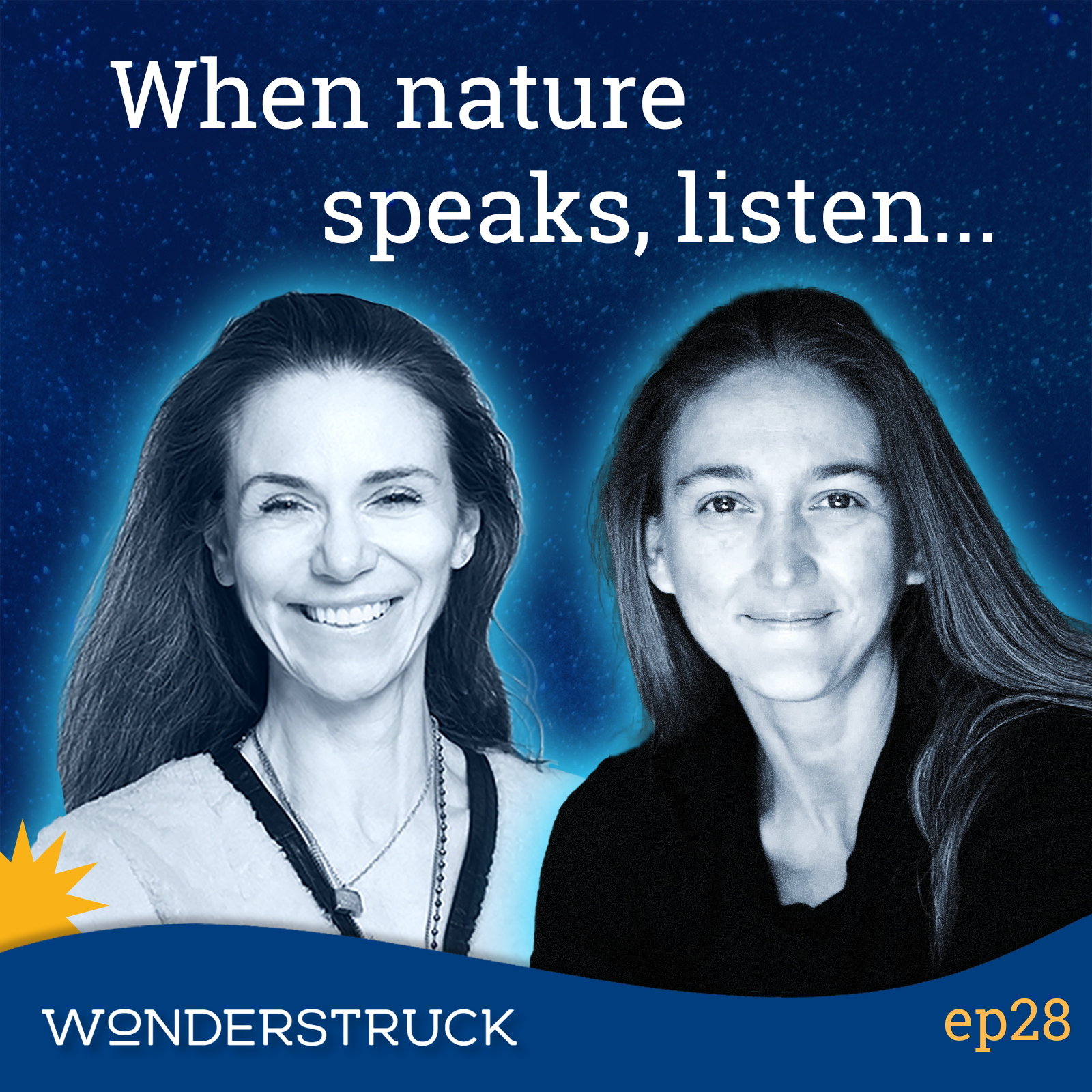
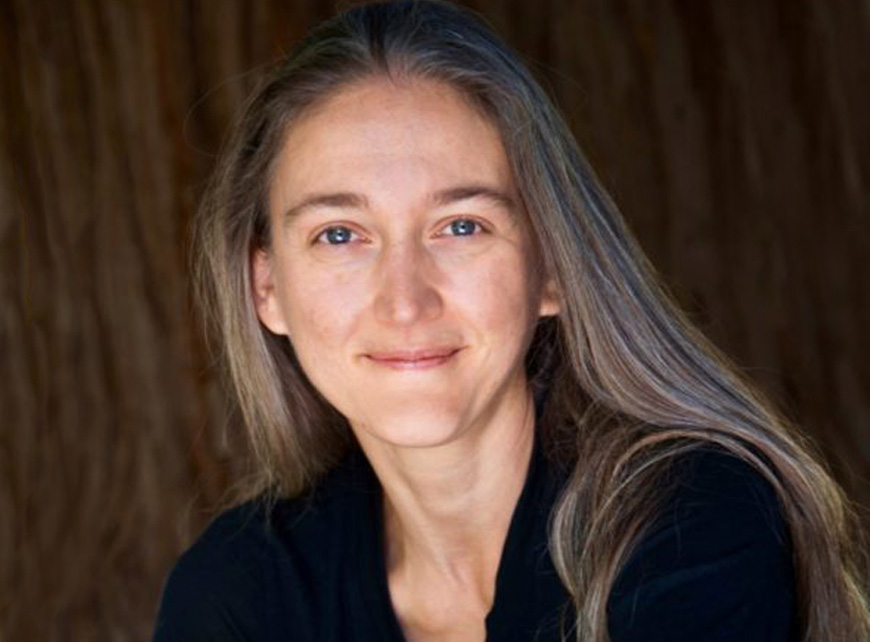
Monica Gagliano
Real science that pushes boundaries, you have no idea, you should not have an idea of what you’re going to encounter. And hopefully you will be surprised. If you’re not surprised. If you’re going to encounter exactly what you predicted, it’s not because you’re a particularly good scientist and so inspirational. It’s just because you’re doing science that is not maybe doing much.
Elizabeth Rovere
Can we communicate with plants? Can plants teach us what they know? Plants have been around way longer than we have. Plants go back to the dinosaurs, millions of years ago, and us, well, merely hundreds of thousands. Our guest today is Dr. Monica Gagliano, a pioneer in plant intelligence. Monica looks at how plants learn, remember, and communicate. In our conversation, Monica tells me about the pivotal underwater moment that changed her life for forever. We discuss her exit from academia, her dialogue with the forest, and how she takes inspiration from dreams. Monica is an amazing and deeply inspiring, brilliant, heartfelt person, and I really hope you enjoy this conversation as much as I did. I am Elizabeth Rovere, a clinical psychologist, a yoga teacher, and a pilgrim in the realms of wonder and awe. This is Wonderstruck, a podcast about awe in all its forms, including the beautiful, the humbling, and even the uncanny. Together with thinkers and seekers, we explore the moments that undo us and awaken us to the very mystery of being. So welcome, Monica Gagliano. Thank you so much for coming to the Wonderstruck podcast. I am absolutely delighted to have you here. I did not know you or your work, and now that I do, I’m never going to forget it. So I know you’ve started and you’ve mentioned this a lot, but I’m interested in other dimensions of this experience that you had as well than just the story of it. But your experience on the Great Barrier Reef, and you were with these damselfish, and there was a point in time where you had to kill them for the research and something happened where you felt like, I can’t do it. I can’t kill these fish. And it shifted your life, changed your trajectory. And I was wondering if you could talk about that, the experience you had, and almost as though it seemed like it was kind of an initiation and a shift to something, and I was curious about it.
Monica Gagliano
So thank you for having me, first of all. Of course. And it’s interesting because that experience, many people want to know about it. It’s almost like there is something about that moment that, of course, as you said perfectly, it was an initiation. I just didn’t know at the time. And it was like all initiation. It was like something needed to die for something else to be birthed and moved forward. And of course, at the time, it was just, for me, was just tragedy and drama. And I went down kicking and screaming because I was not prepared. I was not expecting any of that to happen. But for me, it was on the Great Barrier Reef because that was the site where I was doing all my research. And I had been working there for my PhD research and then for my postdoctoral research at the beginning. And I was an ecologist, a field ecologist, so I would always work outdoors in the reef in this case. And. Yeah, and this experiment involved maternal effects, which now we would call epigenetic effects. So, yeah, I had been following these mom and dads over the course of several months. And my interest was like, okay, I want to see what happens when moms are experiencing this different level of stress in their environment. And stress, like a natural level of stress from perceived competition or lack of resources or any of those. And how would that affect or trickle through the next generation? And of course, I was following mom and dad, and then the babies. And following mom and dad meant that I went to the reef every day and check on every pair and see when the babies were ready. And in this case, dad is the one looking after the babies. So, you know, they become very aggressive because they don’t want you to touch anything. But then they had different personalities. And some of them were, like, very serious about their job, but also very curious about you. So they would come close. You know, these are wild animals. And some of them, you know, I would put my hand out and they would just sit in my hand because they saw me every day. So it’s like, ah, here is Monica again. So they would come in my hand and, like, I could close my hand around them. Again, these are wild animals.
Elizabeth Rovere
Yeah.
Monica Gagliano
And they’re like, this is just Monica doing Monica thing, you know. And this was over the course of several months. So, like, I knew
Elizabeth Rovere
How long before they let you close your hand around them?
Monica Gagliano
It was weeks.
Elizabeth Rovere
Really?
Monica Gagliano
Yeah.
Elizabeth Rovere
Wow.
Monica Gagliano
And these are like, you know, in doing science, you know, each reef, each little pocket of the reef was numbered.
Elizabeth Rovere
Yeah.
Monica Gagliano
But I knew the individual. So it’s like the number is 25, oh he’s a bit, you know, neurotic, but she’s really chilled out. And then you would go to another bit of the reef and there would be another pair, of course, numbered. But I knew them as their own personality, their own. You know, I knew who was there. And at the same time, of course, they knew me. And I think I didn’t realize how much trust there was in there until the end, when on the last day of the experiment, my research required that I collect the fish.
Elizabeth Rovere
All of them?
Monica Gagliano
Yes. And I needed to take the body parts basically to validate some of the things that I was observing as a more observational, behavioral aspect of the story. And so I was like, oh, if you’re talking about stress, we need to have the level of cortisol in your liver to see that. Yeah, it’s really stressed. I can tell the mom is stressed. I can see it. But it wasn’t enough. So the science required the bodies.
Elizabeth Rovere
Can I just ask you, you could tell that she was stressed?
Monica Gagliano
Yeah. Because behaviorally, you get used to see them and you know, when they’re like. It’s almost like hyperactive, you know, like when someone is neurotic or nervous.
Elizabeth Rovere
Right.
Monica Gagliano
It was the same with them. And you knew what the baseline was because you see them all the time. So that you know what is normal and what is not quite. And.
Elizabeth Rovere
Yeah.
Monica Gagliano
And yeah. So I remember that day because that was my initiation day. Yeah. And unknowingly to me, and I went in the water in the morning because I just wanted to say goodbye, and I didn’t have any other gear on me with me that was suggesting that I was going to go and catch them and kill them all. It was literally just me with my diving gear, and that’s it.
Elizabeth Rovere
Wow.
Monica Gagliano
But in my head or inside me, the idea of like, I’m coming to say goodbye because I’m coming back to get you all and this is your last day, that was what was inside me or with me.
Elizabeth Rovere
Right.
Monica Gagliano
And that is what they heard or felt. And so nobody came out that day.
Elizabeth Rovere
Nobody came out that day.
Monica Gagliano
They were all hiding and they were all, like, looking through the little hole and you could tell that they were like, this is scary. This is like, this is a predator. I was the predator. So from going to, like, I trust you so much that you can put. You can, you know, close your hands around me and it’s okay to, like, I don’t trust you at all. And not only that, but you have no right to be here in my home or our home and trying to kill us? Who do you think you are?
Elizabeth Rovere
Right.
Monica Gagliano
So many things happened, of course, in that moment, and it took me 10 years to actually really digest and integrate what happened. And at the beginning, I didn’t dare talking to anyone about it. And the first time I did was actually in a forum that was primarily made up of humanities scholars. Because I didn’t dare say this with my scientist colleagues. By then, I understood that the fish was teaching me so many things. One, you don’t have the right to take anybody’s life. It doesn’t matter what your question is. It doesn’t matter how important you think that question is. There is no such a question that is important enough for you to give you the right to interfere with someone else’s life, especially if your interference is like, their death. But then also something in a way even more profound, at least from my perspective, was like, oh, my God. Realization that something is tremendously wrong and I cannot. I’m hopeless. I feel hopeless. And I’m frozen by my fear and my guilt. And a little bit of guilt is good. A little bit of fear is good. It kind of like, it’s encouraging us to move in a different position and take a different posture. But too much is not good because it freezes us. And then what we do is precisely what I did. I went in the afternoon and got them all. Yeah, they fought for their life. I fought for my data. And the only reason why I did that was because in that position of fear and guilt and frozen, I couldn’t think of what else I could do. The only thing that I can think is repeat the past.
Elizabeth Rovere
Yeah.
Monica Gagliano
And then, you know, as I said 10 years later, when I first shared this story, I called it the story of the two seeds. Because there was like this ambivalence of, like, yeah, these experiences can free us and move us forward, or we can get stuck in them and be completely hopeless. And I could see when I was then looking at the bigger picture at the planetary level for humanity, how much of that was true at that level. And when you are faced with that reality, the first thing is like, I don’t know what to do. I’m scared. I feel guilty because maybe I should have done something earlier and I don’t know what to do. Now it’s too late. And then hopelessness follows. But, you know, the other option is, oh, so there is something to do. The choice that I make from this moment on does matter. In my case, I became vegetarian pretty much straight away. But it wasn’t even a decision. It was more like, well, this is an easy compromise, so I can do it. And then the other compromise that I could do is like, well, who said that my science needs to be like this? So I started changing my approach to my own science, first trying to still work with the fish, but insisting on having my behavioral data being enough. It’s like, why do you need something validating something that is obvious?
Elizabeth Rovere
Well, that’s a great question. Why do you need something that you have to validate that is obvious? It seems like that happens all the time. And I know it sounds like I’m sort of dissing science, but just to bring like a moment of quick levity. When I was in grad school for psychology, there was a research study that came out that when you tell someone calm down, it makes them agitated. I was like, well, we all know that.
Monica Gagliano
That’s right.
Elizabeth Rovere
That’s what it feels like. People get annoyed when you tell them to calm down. And I was just like, God, why, what is this, this kind of absurdity just so you can have numbers to prove something?
Monica Gagliano
That’s right.
Elizabeth Rovere
And I love that you’re like, my observations can be enough. My experience is a piece of the knowledge. My empathetic connection is also part of knowing.
Monica Gagliano
That’s right. And of course, in my case with the fish, it became very obvious because, you know, this is. It’s not just a practice, it’s an establishment.
Elizabeth Rovere
It’s an establishment. Yeah.
Monica Gagliano
So it wasn’t about, like, oh, I’m going to change my practice and I can just carry on with a different way of practicing science. No, it’s like, no science is practiced within a context and the establishment decides what the, what are the rules of science right now? And so if you’re not within the establishment and those rules, basically you’re not scientists. You’re not doing the science that we consider science. And so I realized that, oh, my God, I think I’m going to run out of possibilities here because soon enough I was like, trying to publish work and like, yeah, but where is the, you know, the cortisol level from the liver? Or did you take a blood sample? Or did you take a liver, a heart or lung sample? And I was like, no, no, I didn’t. On purpose. And, and so then, then there was the second part of the initiation, I guess, because it became like, okay, so maybe that’s the end of my career. It just started. I was really enjoying this. I love doing my work and I’ve been wanting to be, I have been a scientist since I was a child. So it’s like, huh, this sucks. So what am I gonna do? I really, this is what I really wanted to do always. So it’s like, and. And that’s when the plants for me came to the rescue. And I said it many times, the plants rescued the scientist in me.
Elizabeth Rovere
The plants rescued the scientist in you.
Monica Gagliano
Yeah, yeah. Because we, with my partner at the time, we moved from one side of Australia to the other side, and so we had a new home, and we had the opportunity to set up a new, fresh, new garden.
Elizabeth Rovere
Beautiful.
Monica Gagliano
So I was spending a lot of time there because it just felt very nurturing and soothing for everything that was going on. And as I was planting the very simple, in inverted commas, simple plants, like your basil and your herbs. Right? Your basil and then your chili plants, tomatoes and whatever, I was like, ah, this is very. Yeah. Soothing. And then one day was like, but you can work with us. And I was like, huh? And he’s like, yeah, you can work with us. You just take a leaf and nothing happens, you know? And I was like, okay, now I’m really losing it. Maybe. Maybe this initiation business is really bad for you. But somehow, I don’t know, I think I leaned into it. And at the same time, many other opportunities to engage with plants in many different ways arised.
Elizabeth Rovere
Can I just stop you because I think that’s so beautiful. I love that you’re working in the garden and you hear this or experience this or sense this. You could work with us. And you’re like, on the one hand, you’re like, gosh, am I losing my mind? And then the other hand, you’re like, I don’t. So I’m just really curious. Like, something came over you. You’re like, I’m leaning into it. I’m not scared of this. Something really strongly feels resonant and right. And I. Can you just share about that? Like, how did you just. Did you just know?
Monica Gagliano
I think, again, this is a slow. I’m a, I’m a slow learner and a slow cook, I think. Because the part that was like, oh, my God, I am really going crazy here, was the part that was dying. Was the, you know, institutionalized scientist that was trained to think and act in a particular way according to the specific rules. And there is nothing wrong with some of those rules, but it depends how they are applied. They can go very wrong, even for science itself. So. And on the other side, I think there was the part of me that enjoyed making herbal teas. And so, you know, like, all I’ve always. Which I couldn’t distinguish from the scientist because to me, now, especially now, they are just one and the same. But it’s like, I always enjoy, like, you know, like, having, like, oh, I wonder what this plant with this plant is gonna do. And then you read it’s like, oh, if you want to have, like, a nice, good sleep, you put this and that and that. But if you want to dream, then you put this one as well. And so it was literally a kind of alchemical practice. Right. Or like trying, seeing, and it was very experimental because, like, oh, let’s see what the effect is if I do A, B and C. And so it’s the scientist, really, it’s like you’re testing stuff. So I think that that part that was more prone to play and experiment for real without the rules of, like, oh, you can’t do it that way, this way. I didn’t know anything about plants. And in that moment, I also made a very clear decision to not learn about them from a scientific perspective. So the names of the plants, like, the scientific names and all of that, for a long time I tried to resist and I. I still don’t. I don’t care. I don’t want to know the Latin name. I want to meet the plant first and see who is there. Then, of course, if I’m working a lot with that particular plant is. It’s kind of natural that I bump into the different labels that that plant is being given. Yeah, but I want to meet the being first. So. So, yes. So for a long time, my science with the plants was very much like a science that anybody could do.
Elizabeth Rovere
And it makes me think of, you know, when we were at the Harvard Plants and Fungi conference, there was Alfred North Whitehead had come up about, science begins in wonder. Like, the discoveries begin in wonder and imagination. And it doesn’t end with like a number or an identification of cortisol, but it ends in wonder. And like, on an ongoing exploration, it doesn’t really end. And I think that that’s what you’re describing epitomizes that, you know, and that to me makes a lot of sense. And it doesn’t have to necessarily exclude what we think of as traditional science. It’s like a piece of it, but it expands beyond it.
Monica Gagliano
That’s right. It’s like, I perceived as, okay, I know what the working rules are and I’ve got some tools that I learned on the way and I’ve been taught some tools, but all of those are there for me to play with. So I can bend them, I can twist them around, I can use them upside down. It doesn’t matter, you know, and yeah, I know that, you know, if I’m doing a statistical analysis, it needs to be in a particular way because that’s how statistical analysis work. So it’s not that everything is bendable and you can’t put everything upside down. But where you can. Why not? Because it’s a different perspective. So you might actually do see something that it wasn’t literally visible before. Yeah. And so I guess with the plants, that’s what I started doing. Because. Especially because I was not a plant biologist. I was like, it’s not that I’m trying to, you know, protect some identity or some, like, career move. It’s like, I’m an animal ecologist. I tell you straight, you know, So I didn’t have anything to lose. I was just. I’m just playing here. And I just wonder why some questions haven’t been asked.
Elizabeth Rovere
Yeah, I love that. I wonder why some questions haven’t been asked. Like, so, for example. So tell us one of these questions. And then I also think it’s super cool that because you are a hard scientist, you can do all of the data and the statistics. So you put your papers out there and people really can’t critique the data. They’re just like, wait, why is she asking that? Which I think is so funny, because it’s like, how can you ask, how could she ask that? Isn’t that the whole point?
Monica Gagliano
Well, you know, the classic was my very first experiment, of course, was done with the plants from that garden that I put on because it’s right there. And they invited me, so. Okay. And I told them, like, I don’t know anything about plants. And they were like, don’t worry, we’ll teach you. And I didn’t know how serious they were when they said that. I know now. But I remember the first experiment at the time, again with the eyes and the hat of an animal ecologist. I went in and looked at the literature that was available on plants in terms of communication. And as an animal ecologist, you would have, you know, like, animals use all sorts of signals of different kinds, but sound is one of those. I was very surprised when I. In the plant literature, I found that there was already quite a bit known about plant communication in terms of chemistry, like the volatiles that are used to communicate. So that was already, I would say, kind of established, accepted.
Elizabeth Rovere
Yeah.
Monica Gagliano
We have known for a very long time, maybe even the earliest of the research was on, you know, abilities, plant abilities to detect different colors and different frequencies and behave accordingly. And so in a way would be the closest, as akin to our vision, you know, like the use of. They don’t have eyes, just to clarify. But that doesn’t mean that they don’t see.
Elizabeth Rovere
Right.
Monica Gagliano
And so you don’t have to have eyes like this to see. And also in animals, we have plenty of systems that don’t have eyes like ours and still are able to detect colors and frequencies and shift in frequencies of light. So, of course, plants are the masters of manipulating light, right? They eat it. That’s how they do it. And there were some beautiful papers already at the time where they were showing, for example, that a plant is able to detect the ratio between the red and infrared. So it’s not even just one frequency, but how these two frequencies are changing relative to each other. So they were like, light was there, chemistry was there, and then touch was there, because there was already some papers showing that underground it’s, like, some of the roots, they exude some chemicals that are very kind of aggressive towards others. And so they keep everyone away. And some others like, oh, no, we are friends. We can, you know, stay together. So the touch of the roots and the proximity of roots also was part of the communication system. So my question was, okay, as an animal ecologist, what about sound? And sound is everywhere. We can’t get away from it. It’s all over. So my experiment was like, okay, I didn’t start by testing sound. I thought, let’s see if at the moment we know of these three channels of communication. The plants use light, chemistry, and touch. What if we, in different combination, close them out, close them up? And, you know, in my set, my kind of test plant was the chili plants. And the chilies from companion planting are known to be kind of in friendly companionship with basil. And they go well also in our meals. So it’s like, I understand that. But they don’t do so well with fennel plants. And fennel plants are particularly aggressive. And in fact, in most gardens, fennels is not really plant close to other plants. He’s a lone dude. So, yeah, he exudes chemistry in the ground that keeps everyone kind of away. And so, well, my chili plants could tell whether it was basil or it was fennel hiding, according to my setup, hiding in there.
Elizabeth Rovere
Yeah.
Monica Gagliano
Even if they couldn’t smell it, they couldn’t touch it and then couldn’t see it. So that’s when it’s like, oh, maybe they can hear it, or maybe there are so many other opportunities to explore here. So obviously, there are other channels of communication that we don’t know. When I published the paper, one of the reviewers was like, this is ridiculous. This is not science. Nobody would ever do an experiment like this, not having a clear hypothesis first. And it’s like, my hypothesis is very clear. It’s like, we know that these are the channels. Is there more? Is there other things that we don’t know? But he just, he, I’m assuming it’s a he, he was so fixated with the idea that this is not science is done. Because in a way, it’s like science is done according to that kind of model that you already know what you’re looking for. Yeah, exactly. It’s like, it’s like.
Elizabeth Rovere
Wait, what? Isn’t it the opposite?
Monica Gagliano
Exactly.
Elizabeth Rovere
I mean, but that’s, that’s really funny. I mean, that’s crazy and silly and it’s like, guys, wake up. What are we talking about here? Seriously.
Monica Gagliano
I know.
Elizabeth Rovere
Like, come on, we gotta ask these questions.
Monica Gagliano
But if you think about, we have to write our grants.
Elizabeth Rovere
I know, I know.
Monica Gagliano
And all our proposals. No, but that’s why most of us, let’s face it, we do the work and then we write the grant. Of course. Because otherwise you’ll never get it. You need to already know what is the most likely scenario that you’re going to encounter. But if it’s real science, real science that pushes boundaries, you have no idea. You should not have an idea of what you’re going to encounter.
Elizabeth Rovere
Exactly.
Monica Gagliano
And hopefully you will be surprised.
Elizabeth Rovere
Exactly.
Monica Gagliano
If you’re not surprised. If you’re going to encounter exactly what you predicted, it’s not because you’re a particularly good scientist and so inspirational. It’s just because you’re doing science that is not maybe doing much.
Elizabeth Rovere
Yeah, you’re seeing what you want to see and what you’ve predetermined and maybe we learn a little bit of something and there’s a little bit of growth, but not at the same level that we could get if we just didn’t know which we don’t know. But it makes me think of when you’ve talked about that and there’s something just so funny about it. It’s like this idea of really bringing the subject into the room, like the subject being the scientist instead of pretending. Because it’s like there is not really objective science. And it’s like, can we just get over it and bring ourselves into the room and then work with that? And then you bring in the empathetic or empathy part of that. And you know, I’ve read. It was funny. When I first read it, I was like, wait, what? Wait, is that a critique or a compliment? Because they were saying like. Or they, whoever they are, the new wave of romantic science. And I was like, oh, that’s so cool. And I was like. I was like, wait, it’s My producer’s like, no, that’s a criticism. I was like, really?
Monica Gagliano
Yeah.
Elizabeth Rovere
Because this kind of way of looking at it holistically, and that makes a lot of intuitive sense.
Monica Gagliano
I’m going to be specific here because maybe in some context, this kind of science that is a very reductionist science works, and maybe it works really well, and it’s precisely what that particular context needs. Fine. But if you’re looking at interaction with other beings, then so you’re doing really life science, living science, then those assumptions are dangerous. And there is a beautiful work by a colleague. I was just with her, like, yesterday. Her name is Barbara Smuts. She worked with baboons as a behavioral ecologist. And she was taught that if you were in the field, if you work with baboons, you have to pretend to be a rock. Exactly. It’s funny, but it’s like, imagine this is how we train our people, right? So that you are not there. You need to be objective. And objective means that literally you turn into an object. So you just pretend to be a rock. You’re not there. And of course, imagine if the situation was in reverse. So there is a baboon hiding behind a rock, pretending to be a rock, and we are having a chat, and you’re like, what is the baboon doing behind the rock like that?
Monica Gagliano
So the baboons, of course, did exactly the same. It’s like, what is that thing hiding? And if something is hiding, the first reaction would be like, is this danger?
Elizabeth Rovere
Of course, yeah.
Monica Gagliano
So actually that behavior invites aggressive behavior back. Because why would you hide? Why don’t you come forward? So eventually. And baboons can be pretty vicious. So it’s like eventually she had to change her approach.
Elizabeth Rovere
Fascinating.
Monica Gagliano
And by doing so, she became part of the troop. So she was like, oh, now that we can see you, now that we understand who you are, we are also happy to show you who we are. And she did some work on reproductive ecology of baboons and the things that she saw and was allowed to see. The intimacy of that was only possible because she put herself in the picture.
Elizabeth Rovere
Right.
Monica Gagliano
So this actually is good science.
Elizabeth Rovere
Such a great story to explain that. It’s brilliant.
Monica Gagliano
Because it’s like the other thing, like, she could have probably observed and took data about, oh, the baboons are very aggressive. Yeah, it’s like, yeah, because you’re hiding behind a rock, you know, so. And the idea that you are not there, it’s not valid. So you’re influencing what you’re observing regardless.
Elizabeth Rovere
Right.
Monica Gagliano
But the behavior that you’re observing is actually constructed in response to a not very normal situation. A human hiding behind a rock. While the second version where she actually like, you know what I need to. So she literally started moving like a baboon and trying to, you know, be part of it, then opens up a space.
Elizabeth Rovere
Yeah, that’s an empathetic experience.
Monica Gagliano
Exactly.
Elizabeth Rovere
Move like them, relate to them, reflect, like be with them, try to really understand them. You know, we have to talk about this empathy aspect and empathy as a form of perception, which you’ve talked about. Have you heard of this guy, Roman Krznaric, he’s a philosopher, he has a book on empathy. I think you will like it. I’ve only read parts of it, so I can’t tell you I’ve read the whole thing, but. So he’s a philosopher and he talks about empathy as a form of perception and it allows us to really see the world or see through others eyes. And it’s not just about being sympathetic, it’s really going inside. And I know you talk about that and we’ve dismissed empathy and human experience as just kind of like an emotional thing. And the other thing I want to bring in too is that going back to the time of Freud, Freud talked about empathy as a form of emotional telepathy. And he couldn’t really talk about it, but he’s like, you know, yeah, therapists will use this all the time, but we can’t talk about it because you’re really in, you’re really connecting on a different plane, if you will. So I was wondering if you would talk about that a little bit in your work, in your work with plants and maybe has it influenced your way of being with other people?
Monica Gagliano
Absolutely. Of course. I’m going to start from a concept that is being used a lot, especially when we were at the conference. And the word is more-than-human. And of course this comes from David Abram’s work and because I think he was the one that kind of coined the term. And yeah, more-than-human is a beautiful term. And I recently had this little, you know, when you have this like, oh, I didn’t think of this but actually I like this. You know, you have little. I usually get those moments in the shower. I know, I know as like, I don’t know why I get inspired, but yeah, and so I’m going to use this because what you’re talking about, when we talk about empathy, I think empathy is a word now that has got so much luggage attached to it that is very difficult to talk about it without either falling on cliche or sounding very new agey hippie kind of thing. Nothing wrong with either of those things. But you know, more-than-human is not just… To me, I just realized that it’s not just referring to these others that are not this. So they’re not just, oh, plants are more-than-human because they’re not human. Animals are more-than-human because they’re not human. More-than-human is not a who, it’s a place. And so when I engage with my dog, and this is an experience that I’m sure many listeners have, like anybody that has a dog or has had a dog in their life, they would know this. And like you’re talking to your dog, you’re having a full on conversation. And it’s literally a conversation in the sense that your dog is responding and sometimes he’s responding with sound, but other times it’s just body language and all sorts. But we know exactly what’s going on, you know, and there is a back and forth, you know.
Elizabeth Rovere
Absolutely.
Monica Gagliano
And it’s totally natural. In that moment of exchange, the dog is the more-than-human. But the human also become more-than-human because both have entered a space in between which is this space that is transcending that animal and this animal where we meet. And so what we call empathy, I think, is this space where both parties or the parties that are involved in the conversation somehow let go of some of their boundaries so that they can feel into the other. And in doing that, in feeling into the other, they themselves become something else for that moment. So everyone is becoming more than what they are. So empathy is enriching also because of that. It’s allowing you to be more than what you are. And then to realize actually this is the status quo. We are always, and we are always in conversation with someone around us, whether we are aware of it or not. So we are always embedded in a space that is more-than-human.
Elizabeth Rovere
That’s great. I love that. I love that. It’s so interesting too because it’s like, okay, so you’re saying that that’s the status quo. And I want it to be the status quo because it implies a sense of connection and interconnection and community and communing, right.
Monica Gagliano
Inevitably.
Elizabeth Rovere
On the one hand we have that status quo of interconnection and on the other hand we keep separating ourselves and you know, from each other, from the natural world. So I’m curious about that and I want to loop in on one other thing about that. There’s a struck, I’ve only read this recently, this week, there’s a British historian that says that his name is Toynbee, Arnold Toynbee, who says that humanity is. We’re not, you know, we’re not going to. Civilization is not going to die by murder, it’s going to die by suicide. And I think, like, by virtue of our own splitting off and sequestering separation, we are killing ourselves. And how do we go back to the recognition or remembering of the interconnection with others and the plant world from that kind of, what I would think is suicide? And one last thing, when you talk about the idea that, you know, humans are just this blip, like the plants are going to survive, the trees are fine, you know, climate change isn’t going to knock us off. Not anybody, you know, like, really at the end of the day.
Elizabeth Rovere
Does that make sense?
Monica Gagliano
Yeah. Yeah. So I’m going to start from the words of an elder from Australia that I was spending time with just before I flew to the US so it’s like just over a month ago, I was in the field with him. We were around the fire, which is, you know, where real sharing occurs. Or like, it’s a good place for sharing to occur. In Australia, we. It’s funny, in Australia, we call it yarning. Yeah, it’s exactly written like the yarn that I spin in the room. And the yarning is also like, we are weaving stories.
Elizabeth Rovere
Beautiful.
Monica Gagliano
So that’s how it’s called. And it’s just like we’re just having a chat, sharing stories, communing, communicating. And he. I think it was him that said to me, no, no, it’s not the human that is dying, it’s civilization. So the human and the spirit of that animal has got nothing to do really with what it looks like it is now. It’s just this is almost like a layer that is being put on top because. And we know, and we were talking about it before when Covid came in that moment or those long months of restriction, contraction, fear, all of those, many people turned to what? Nurseries, plant nurseries. I can’t have nature because I am not allowed to go outside because it’s so dangerous. So I have to bring nature to me. Lots of people had, like bought, dogs. And I think that the thing that we lost and we missed the most, which then as soon as we came back to normal, we didn’t realize that actually that was just a sign of what is really important to us it’s like Zoom exploded because we’re like, we were starving for connection. Connection with what? Or with who? The human. So the others, nature, animal, plants, whatever form, bring it to me because I’m starving, and bring it to me in any way that’s possible, because right now I’m told that I can’t go to them. Then we forgot that those were just like. It was almost like a little hint. It’s like, hey, maybe you need to refocus and decide what is really important here. So we had this experience. It clearly showed us these are the things that matter to people, to humans. And then somehow we return to the very situation that can put in place a situation like Covid, where then, you know, we are cutting off ourselves, we are isolating people. We don’t care about the others that live with us. Human and more-than-humans. And it’s like, wow, how fast can we, can we forget? But that is civilization. The one that was like, oh, I’m gonna call this plant nursery and buy a plant. That is the human. And they’re two different things. And I’m sure the historians and anthropologists disagree, but I’m not an historian or anthropologist, so I can say this. And I really. When I heard it from the elder, I felt like, yeah, I hear that. And so what I’m working for right now is for that human. And if civilization as we know it, for this moment, we had so many runs of different type of civilizations. So it’s like, okay, maybe this empire also will go. All of them did, every single one, except one, the church. That one is strong still, but, you know, but all of the others have come and gone. They’ve been amazing. Super rich, super enormous. And then they fall. So this one is going to do precisely the same. And maybe that’s where we are at, is the falling of the empire.
Elizabeth Rovere
Yeah.
Monica Gagliano
And like all of these times before history shows it over and over again, it’s like, there’s nothing new. But the humans is what I think is worth protecting and is worth nurturing and maybe even saving.
Elizabeth Rovere
Yeah. So that’s very. That’s. There’s something very beautiful and hopeful about that. And I appreciate what you’re saying, and it makes me think, too, in regard to how you work. Right. You’re kind of all in on so many different levels of doing things in a beautiful holistic way. So when you work, you talked about the yarn and the elders, and I was just thinking for our listeners to understand that you are a hardcore scientist or a PhD scientist, but you also work with indigenous science and indigenous wisdom, and you. I guess you bring them together or I’m not sure how you bridge them. And so I was wondering if you could maybe explain, what does that mean, indigenous science? Is it something about talking to the elders? And what about bringing in the collaborative work as well with the plants? Because they’re. They’re kind of linked, correct?
Monica Gagliano
Yeah, they are. And it’s also interesting because until I wrote Thus Spoke the Plant, I remember very clearly some of my colleagues in my corridors where I was at the university in Australia, yeah, they were looking at me like, there is something wrong with her. And what they didn’t know until I found the courage or I was encouraged by the plants themselves to write the book, was that, yeah, I had co authors in my work who were not human. And these more-than-humans had been active participants in shaping my experiments, in shaping my approach, in shaping the ideas. And I’m talking about specifically in the context of Amazonian spaces. But not only, you know, I had plenty of other adventures, even here in the US and in Australia, of course, but in the Amazon, there are particular practices which are indigenous and they’re very scientific in their approach. So for me, they are indigenous science. I would like one day to be just talking about science.
Elizabeth Rovere
I agree.
Monica Gagliano
And not indigenous science, Western science. But for now, I think it’s also a way to honor their science. And those approaches, yeah, they’ve been tested many times. They’ve been replicated many times. And you know that if you follow this rule, that rule, that rule, you get these results. So isn’t that what science does? It’s like, oh, here is a set of rules. If you do the experiment like this, the experiment works. And then in science, working doesn’t mean that you get the answer that you want, but it will be the right methodology to get to a answer that is considered scientific. So there is no difference in the Amazon with these practices. And so I’ve been exposed and then actively engaged with these practices. And I had plants, you know, giving their opinion about things and in some situation giving very clear instructions, according to. Which actually according even to modern science or Western science make total sense. So I just followed the instructions. And so I felt like a little bit of a cheat because he’s like, well, I have good friends who are helping me to do this science. And at the same time, it also gave me the, I guess the internal stability, the confidence. The confidence and the stability when the attack comes from the other side. Because there was plenty. And it was exhausting. It is still exhausting.
Elizabeth Rovere
Is it still exhausting? Yeah, because you have such an ebullient energy, you know, and it’s like there’s, like, myself or, like, someone that. I’m not a scientist, but, like, I. And I imagine our listeners here, too, are gonna be like, oh, my God, this is amazing. It’s incredible that she’s doing this work. Thank God. So I would imagine you get both. But of course, it’s hard to get bullied like that.
Monica Gagliano
I think I must have said something at the conference about, like, that I actually left academia, and I’m not employed.
Elizabeth Rovere
Oh, wow.
Monica Gagliano
And. And it wasn’t. It was like. It was a conscious decision. And of course, I went through all the grief and the dying, and then I went into the office, I cleared everything, and I brought out, obviously, all my things, including a pile of lab books, right. With all the data from my PhD with my fish and the mimosa and the peas and all of those stories, and I burnt them all. It was so satisfying. It was unbelievable. I had a friend who was playing the didge for me. So it was a ceremony. You know, we lit the fire. Like, I am very grateful for all of that, but the scientist that is here now, or whatever we want to call that thing that is here now, it’s something else. And she doesn’t need these anymore. So I burned them all. They didn’t want to burn, so I had to, like, shove them in there, in the fire seriously, it was like this. Like, it’s supposed to be very ceremonial, but it’s like I’m there, like I was torching it. And. Yeah, and that kind of started really a new. A new phase, which is what I’m doing now.
Elizabeth Rovere
When I’ve read about the way that you have communicated with the plants again, I just think it’s beautiful. I’m listening, but not with my ears. I’m experiencing what they say with a felt sense of knowing. And, you know, we sort of can be descriptive in how we talk about it, but we don’t have quite a sense of it. But it, to me, it makes a lot of sense because it just makes a lot of sense. It just feels intuitively accurate. Again, I don’t even know how to describe. It’s like, yeah, that’s resonant. That’s. I get that. So I was wondering if you could talk about maybe, I don’t know, an experience of something. And then the other question was, do they. You’re going to laugh at this. Do they like us? I mean, do they. Do they like the human? Do they think, like, okay, the human’s cool enough to keep around.
Monica Gagliano
I don’t know if they think we’re cool. But there is certainly a kind of like. Like, aww, aww you still didn’t get this. Like little babies. Let me explain again. Yeah, exactly. That is a lot. I received a lot of that. But I don’t feel they’re bullying me. Like, in the contrary, I feel almost like, okay, so let’s start again, you know, and there is great patience. But that’s one of their characteristics, right. They are very patient because they live in a very different time. They live in a different time zone, literally. And their time zone is, for many of them is, especially when we talk about big trees, is like. It’s stretched to a place where we cannot even contemplate. We can put the numbers, but really, if we had to think of, I don’t know, an oak that is 800 years old. What does that mean? I cannot conceive. My mind is like, 800 years. I know the number, but it doesn’t mean anything.
Elizabeth Rovere
And at best, like, we could be a hundred years, for example, and they’re 800, 8 times that. Yeah, yeah.
Monica Gagliano
I mean, an oak that is a thousand years would have been around just after, you know, after Christ.
Elizabeth Rovere
Wow.
Monica Gagliano
You know, the Romans were still hanging around. Yeah. And he was already there watching and listening. And I met a tree in Australia that stopped me while we were walking on the bush, in the bush, and with a group of scientists. There were lots of geologists, and I was. Yeah, I was walking, and one of the elders was next to me, and I just felt like something pulling on my shirt. Literally, like a physical sensation of someone, like, doing this. And I was like, what is it? And then I looked, and there is this huge tree. And I’m like. And I’m like, I don’t have time right now. You know, I’m walking, don’t you see, I’m with this group. And then he did it again. And so I turned to the elder and I said, like, the tree wants us to sit with it. But even as I said, I didn’t know what I was saying, it just came out. And he just looked at me like, well, let’s do that then. And I was like, what about the others? He was like, don’t worry about them. You know, it’s almost like, this is what. It’s more important. So it was four of us. There was me and him, and then two people behind us, and they’re like, okay. So we all sat at the base of this big tree, and as soon as I sat, the tree was like, ah, so good to see you again. I was like, I’ve never been here. He said, yeah, but I know of your kind. I remember your kind. And I remember you yarning under me. Like, I remember the sound of your laughter. It’s so good to, you know that you’re back. And we’re like, okay. Thinking, like, either I am the crazy one, or also, this tree is crazy. You know, it’s convinced that I’ve been here before, but I haven’t. And then we got up and carried on walking, and we kind of shared our respective experiences because it was very weird. It’s like we all approached the tree in silence. We all sat in silence. We all stood up in silence and then walked off. Nobody was giving any instruction, direction, or anything. And then only when we were away, we started sharing our respective experiences. I was like, I got this. And it’s like. And then the question came, like, when was the last time the people were here, living here? And the elders are like, oh, 20,000 years ago.
Elizabeth Rovere
Oh, my God.
Monica Gagliano
And I’m like, okay, so this tree remembers us. And he’s been remembering us for 20,000 years or maybe more, and, yeah, I thought, okay.
Elizabeth Rovere
That tree is that old? Or like.
Monica Gagliano
Well, it turns out that that is a clonal tree. So potentially it could be way, way old. Like, that tree could have been there. It’s an interesting place because, like many of the clonal places, when we look, we see a forest of trees.
Elizabeth Rovere
Yeah.
Monica Gagliano
But for a clonal tree, it means that every single tree that you see actually is the same individual. So it’s almost like I always imagine it, like, here is my hand. But if I hide it and you only see the fingers, you think they’re like, oh, I got, like, the fingers.
Elizabeth Rovere
Yeah.
Monica Gagliano
But if then I show you. No, actually, it’s my hand. You wouldn’t think of the fingers as separate entities. You would think, oh, it’s just your hand. So it’s almost like the hand is sitting on the ground and he’s showing you the fingers, which are all these trees. But in fact, he’s one entity, one being. And so maybe I lose one finger one time and another finger, but there will be always some part of my hand sticking out of the ground.
Elizabeth Rovere
That knows or remembers it.
Monica Gagliano
Yeah. And, yeah, it was. That tree became very important. And I just visited, like, yeah. When I was in the field a month ago. And, yeah, it’s a very special tree. Not just for me.
Elizabeth Rovere
It’s impressive. That’s really cool. I love that it likes your laughter.
Monica Gagliano
That’s right.
Elizabeth Rovere
It’s fantastic. You shared the story at Harvard about how plants or, sorry, trees aligned when lightning. Eclipse, when there was an eclipse, that they.
Monica Gagliano
They were synchronized.
Elizabeth Rovere
Synchronized. And I was curious if you could tell us what. What does that mean? Like, what does that mean? And do other. Do we do that somehow? Like do. And other. Like creatures. Like, what is that? What is that? It was really fascinating.
Monica Gagliano
It’s a paper that we just published in the Royal Society in Open science. And it’s. It’s one of those situation where science finds interesting things while originally looking for something else.
Elizabeth Rovere
Oh, I love that. That’s the best.
Monica Gagliano
Exactly. And it often is the case, you know. So we were. It’s a team composed of an ecologist myself, you have physicists, both, like kind of engineering kind of physicists, more technology physicists. And then like we have another professor who is a quantum physicist. And we were there because we were trying to do an experiment with this forest in the Dolomites and sound. But it was one of those situation where we were starting doing the first trials and we were looking to see if the forest would respond to sound that we played back, sound that were relevant, sound of water and wind and fire. We had this set up where we were able to monitor the individual trees and their electrical activity and also how they connected with each other electrically, so both the individual and the collective. And we had in total like 8 points in this little network. So in this little network of trees, we were monitoring and we had already like a pretty long baseline. So monitoring just during the day, night, the normal cycles, what you would expect. And then there was this opportunity because this eclipse passed by while we were having this data running and being collected. So we had a baseline before the eclipse and then baseline after, which is perfect, because if something is happening that is worthwhile noticing, we know what is the normal. And so if anything happened that is really beyond the normal or different from the normal, we can really tell. And we are talking about a change that is tenfold. So it’s not a minor thing. But basically the story is very simple. The eclipse approaches and the older trees that we have in this little network activate themselves. So in animal terminology, they would be anticipating something arriving. And activating means that their behavior from the baseline that we had changes. And we can see it. So it’s not just a minor change. It’s something like, okay, something is going on. They do these. They start these 14 hours before the eclipse arrives in that location. The Dolomites are in Italy. 14 hours means that basically the sun is in Australia or close by, it’s nowhere close to Europe yet. And yet those trees are already detecting something that we don’t know what it is, we did suggest but, and start changing their behavior bioelectrically. And then that information travels through that network. And also all the other trees start synchronizing with that bioelectrical signature. And so they become one. So there is one signature. They all doing the same thing. And then the eclipse arrives. They all synchronize. The eclipse ends and passes, and then they all return to do their own business at the baseline.
Elizabeth Rovere
Yeah.
Monica Gagliano
So a way to describe what’s happening is like we have, like, school of fish or flocks of birds that are like. When we watch them moving as if they are one. But you also know that there are many individuals in that one body that is moving. It’s the same. It’s like here we see the forest as the one entity, but we also know that there are individual trees making these entities. So I like it particularly because it’s really breaking down or it’s leaning into that paradox that it can be either one or many. And he says, what about if it’s one and many at the same time?
Elizabeth Rovere
I love it.
Monica Gagliano
And this is what is challenging, basically. Also, like, beyond the science itself.
Elizabeth Rovere
Love that idea of the one. Well, not the idea. The manifestation of the one that is many. The many is one.
Monica Gagliano
That’s right.
Elizabeth Rovere
Like, here we see it.
Monica Gagliano
That’s right. And what we suggested in the paper. And I was very glad because before we published it, we were still working on it. And I had a chance to talk to a close friend who is a very famous astrophysicist. And I was just telling him what we found without interpreting anything. And he just interrupted and said, but, Monica, could this be like gravimetric waves? And I was like, I’m not a physicist, but I was like, that is exactly the thing that I thought it could be. And what it means is, like, when you have an eclipse, you have the alignment of sun and moon in a particular way relative to the Earth. And in this case, when you have a solar eclipse, you have the sun with its own gravitational pull and the moon with its own gravitational pull. And we all know that just the moon on her own, like the gravity can move oceans, right? So it’s a strong, powerful energy, like gravitational energy. When you have them aligned, you have moon plus sun. So it’s basically the strongest pull that we ever experience on the planet when those eclipses occur. That is a signal that is so, in a way, so specific. And it wouldn’t just appear suddenly it would be building as you approach that moment. Right. Humans perceive eclipse as random and rare, but actually they have a very specific cycle. Just that the cycles can be very long. In this case, this one is a 18 year cycle. So that place, that specific forest in that place experienced exactly the same solar eclipse 18 years prior. If you’re a 18 year old or 10 year old tree, then you never experienced this or you might be very young and you don’t remember. If you’re like 100 year old, you experience this several times, Right? Exactly. I think that’s why, this is an hypothesis, of course. But I think that that’s why the other trees were able to recognize a signal which could be the gravimetric wave, so the change in gravitational pull, starting from earlier in the day, night, whatever that was in time and then transferring, telling others, hey there is this event coming. Prepare.
Elizabeth Rovere
Fascinating.
Monica Gagliano
When you have an eclipse of this kind, the risk is for especially for young tree is to completely dehydrate because it will pull. Imagine the tidal waves that the moon creates during full moon. It will pull the water. So I think that what the other trees are telling everyone else is like close down the system to hold the balance of water between what’s on the top of the soil and bottom of the soil so the water stays where it is instead of being pulled out and then you dry out basically. And is in the. It’s for the benefit of the whole that everyone is protected. And this is another. Yeah, another big lesson for us. Exactly.
Elizabeth Rovere
Another big beautiful lesson for us. That’s fantastic. Thank you so much for explaining that and helping us to understand what it means and what we can learn from it. Monica, is there any kind of a poem or a saying or something that you keep with you in your work?
Monica Gagliano
There is. Of course it is from a poet and it’s a very short sentence that is at the end of an essay written by Mary Oliver. And it’s like, attention is the beginning of devotion. The beginning of devotion. And this is not the attention that, you know, is the cognitive processing of events and memories. The attention that she’s speaking of is in a way what we talked about. It’s like this presence, this, the permission to allow our boundaries to be as porous as possible. And they already are, but we are not putting attention to that. So doing it consciously doing it like I am on purpose allowing these boundaries to be. Yeah. More porous so that others can easily come in and I can easily be beyond me. And. And I like the fact that this is the tool that brings us to devotion, which has this sense of reverence for, you know, for life in general, and which, in a way, is what we are experiencing here. And we can, you know, give all the names that we want and we can call, like, also, what are the different dimensions of reality? Or what is consciousness, or what is blah, blah, blah, blah. And that’s a nice mental entertainment if we want. And it’s also fun sometimes to, you know, toss it around and explore. And we have done this for centuries. It’s not even like a new thing, but at the end is life.
Elizabeth Rovere
Yeah.
Monica Gagliano
That’s what we are so curious about. And life keeps asking us to. Inviting us to, like, pay attention to me. I’m just right here. And I am right here. And we’re like, oh, no, no, no, no. We need to make it very complicated and, like, construct these other ideas and things so that we then can feel we’re going on to this hero’s journey to look for life. And life is right here.
Elizabeth Rovere
Yeah, it’s right here. It’s almost like the way that you describe that brings a sense of the sacred.
Monica Gagliano
That’s right. That’s what it is.
Elizabeth Rovere
It’s beautiful. And it’s not religious. It’s sacred.
Monica Gagliano
It’s so natural.
Elizabeth Rovere
So natural.
Monica Gagliano
There is actually nothing mystical, supernatural, special about any of this. It’s like the moment we as humans, or the humans, the human, or the humanity that needs saving, if we allow that word, it needs saving from all these constructed realities. Because at its core, the essence of the human animal in a very, you know, embodied way, in a very, like, blood and bones and flesh and that animal. It’s life.
Elizabeth Rovere
It’s life. Thank you. Thank you so much. That’s perfect. It’s a perfect way to end. A big thank you to Dr. Monica Gagliano for joining us, and thank you for listening. If you enjoyed this episode and you think somebody else might too, please rate the show, leave us a comment and share it with a friend. You can subscribe to the show on YouTube and wherever you listen to podcasts, and also be sure to follow us on Instagram @wonderstruckpod. Wonderstruck is produced by Nastasya Gecim at Striking Wonder Productions with support from Baillie Newman. Special thanks to Brian O’Kelley, Eliana Eleftheriou, Josh Wilcox and Travis Reece. And remember, stay open to the wonder in life.