Zoë Schlanger
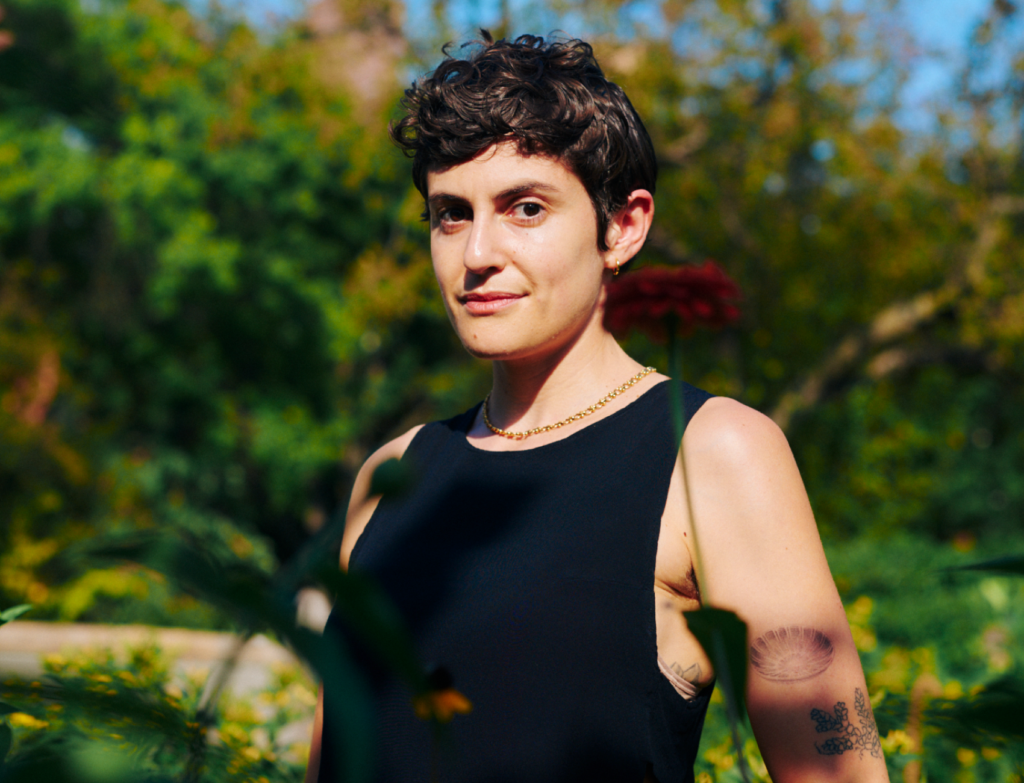
I don’t want to make a fairy tale out of plants, but I wanted to be able to write about the amazing things they did. And then just learning what little freaks plants really are.
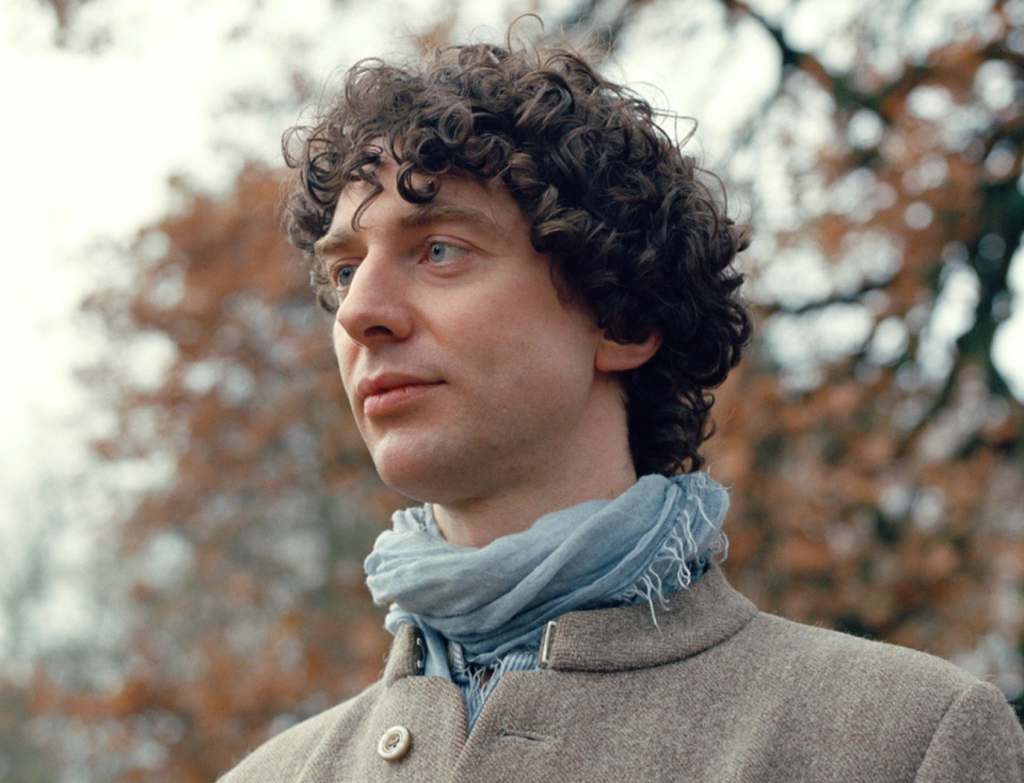
Merlin Sheldrake
There’s a lot of desire to connect with that which is greater than ourselves. It’s become much more urgent and unavoidable to think about these… where do we live and who do we live with? And how might we go about forming partnerships at this time of crisis?
Elizabeth Rovere
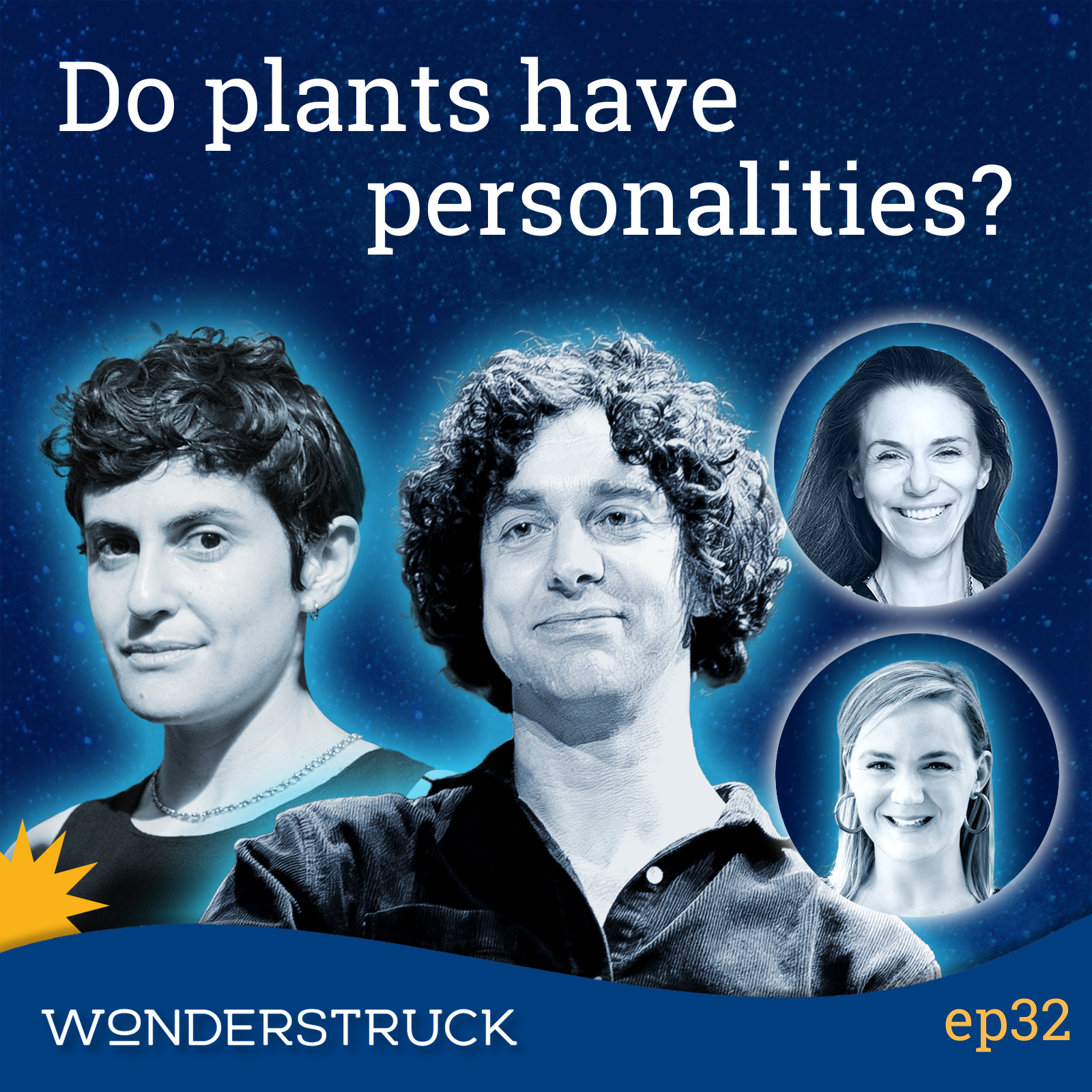
So, welcome to Wonderstruck. We are delighted to have an extraordinary quad pod today. We’ve got Rachael Peterson, Merlin Sheldrake and Zoë Schlanger. Rachael Peterson is going to be my guest co-host and she has been likened to being the Oprah of the plants and fungi world.
Rachael Peterson
No pressure.
Elizabeth Rovere
Merlin Sheldrake is a biologist, author and explorer of the hidden realms beneath our feet. And Zoë Schlanger is a staff writer at the Atlantic where she covers climate change and environmental science with clarity, depth and humanity.
Rachael Peterson
Well, thank you both for being here and thank you, Elizabeth, for hosting. Zoë, Merlin, each of you has respectively written the most popular book on plants and fungi in a long time. And these are books that have changed people’s lives. And I’m curious how each of your lives were changed in writing these books. How were you changed? What did you discover?
Merlin Sheldrake
Some of the things were to do with craft just how hard it is to write about these organisms which are so different from us, and how hard it is to. And reveal a hidden world through words, not depending on pictures, not depending on other kind of visual representations. And then there was a level of just the sustained focus of doing it. So I was kind of. I became very introvert and monkish, I suppose, in the process.
Rachael Peterson
Kind of like a fungus hidden from the world for a while, maybe.
Merlin Sheldrake
Or just a dweeb.
Rachael Peterson
Just a nerd. Let’s not romanticize book writing.
Rachael Peterson
What about you, Zoë?
Zoë Schlanger
I really relate to becoming monkish. It’s the only way to write books. It’s really. It’s a really intense internal and external journey. I think for me, the biggest challenge was handling scientific material with care. I’m a science reporter. I’m used to talking to scientists and translating their work for the public. But I hadn’t realized the sort of controversy I’d stumbled into upon embarking on a plant book that dealt with questions of agency in plants, potential intelligence in plants, brainless intelligence, things like that. And to do service to readers who were lay readers, much like myself in many ways, I had to figure out how to wield metaphor without it becoming a mess of imprecise language and lead people down the wrong path. I don’t want to make a fairy tale out of plants, but I wanted to be able to write about the amazing things they did in ways that regular people could relate to. And then just learning what little freaks plants really are. I think the first, most surprising revelation for me was that ferns have swimming sperm. Did we all know this?
Elizabeth Rovere
No.
Zoë Schlanger
Probably knew this. There’s a lot of YouTube videos about this.
Elizabeth Rovere
Oh, my gosh.
Zoë Schlanger
And I learned about this because I was talking to a fern scientist who had just been to a fern conference, and he said this guy had just presented a paper, he had just realized that the swimming fern sperm was secreting a compound that would sabotage other fern swimming sperm to sort of dominate the zone. And this is the first of many salty plant activities I would come to find out about. But I told all my friends about the fern sperm for weeks.
Rachael Peterson
And do you still have those friends?
Zoë Schlanger
The ones who stuck out this process with me are their good friends. Yeah.
Elizabeth Rovere
This feels like an academic question, but I kind of think it’s interesting, too. I mean, my bias. I kind of think it’s interesting. No, I’m saying it like that because it’s just. It sounds very wordy. Okay, so here we go. What are the most promising positions of intellectual dynamite that you see these days? I.e. Those intentional or unintentional moves in popular, public or academic discourse most likely to facilitate the tectonic shifts into new paradigms?
Zoë Schlanger
I think my favorite one to think about right now, and it’s not by any means new, but I think this move away from centering a biological individual towards imagining all individuality as something of a myth because of the composite nature of all creatures and that they’re being. I mean, one of the hardest things about writing this book is that where does a plant begin and end? And you spoke so beautifully, Merlin, the other day, about how all plants are suffused with fungal hyphae. And there’s the only reason, perhaps I remember reading your book, that there’s a theory of roots, plant roots being evolved, evolving simply for the fact of housing their fungal collaborators and learning how to apply these things we’re learning about fungi, plants, soil microbes, to organisms at large, to ourselves. Of course, the microbiome, the human microbiome was very sexy, like, five years ago. But I don’t think we’re done with that. I think we didn’t quite get past the point of instrumentalizing the gut microbiome to optimize our personal health. We didn’t get to the point of actually acknowledging it as a revelatory concept that we are collections, we are ecologies ourselves. And our every single encounter with the environment shifts those ecologies in ways that have major implications on ourselves. And I think if we started to acknowledge that, the sort of sphere of our selfish consideration would suddenly widen and our sphere of acknowledgment of what matters to us each personally would get much larger and include many other things. And I think it would be a really interesting way to think through a lot of these themes of the conference, which are how do we bring in more-than-human perspectives? And it wouldn’t really even be a question anymore of bringing in more-than-human perspectives. It would simply be the only perspective is everything. Do you know what I mean?
Elizabeth Rovere
Yeah, no, it’s beautifully said.
Merlin Sheldrake
I think for me, some of the work that’s been really helpful and pushing on pressure points very hard is that of Michael Levin, who’s working at Tufts, and he’s been doing all sorts of work over the last few years. Some of, for example, one of the experiments, which is a repeat of repetition of some old experiments, but it shows you some of the kind of thing he’s doing, where you say you have a flatworm. Flatworms can learn tricks. You get the flatworm to learn the trick, you cut off its head. Because they can grow new heads and new brains. They grow a new head and new brain, and they can still remember the trick. And so where’s the memory if it was not in the brain? And it was so many of these wonderful demonstrations that bust through some of our perhaps lazily held assumptions about how life works, how memory works, the explanatory power of the genome versus other morphological factors. And so, yeah, I think his work is amazing. And he produces so much, him and his collaborators in his lab. It’s amazing that they’re just a fountain of novelty and curiosity.
Zoë Schlanger
That made me think of the studies done in the 80s with the worms taught to avoid a certain chemical compound and then put in a blender and fed to other worms who then acquired that aversion to the same compound. I think that was kind of the gist of it, which. It completely obliterates our sense of where memory lives and how it gets transmitted. And to that point as well, even there’s like, epigenetic memories. I mean, there’s ways our bodies hold memories, genetically or extra genetically, that can be passed through generations. And there’s all this amazing work that was done a few years ago in Carrie Nadeau’s lab at Stanford on people who are exposed to air pollution, who then moved away from the site of air pollution, had children, those children had children. And the grandchildren still having reduced lung function, function because of the two generations prior of exposure. And that’s a very sad story, but it does also tell us something about the ways that the environment, which maybe we can construe memory as another type of environmental input, gets passed through bodies, through time, that is far outside what we think of as materially relevant.
Rachael Peterson
And I want to press a little bit on what you said, Zoë, related to this, which is like, if we could just realize our own multiplicity, not instrumentalize the microbiome. It’s easy to say I’m a planet or I’m a universe, but actually realize that in a deeper way. I guess my question is, what would look different in the world? What kind of ethical structures would we create? What actions would we take differently if we really internalize what we’re talking about, of the composite nature of being, not just in a way where it means we’re buying probiotics now because we know that our gut’s full of bacteria? Maybe a question for both of you.
Merlin Sheldrake
The word ecology comes from the Greek word oikos, which means home or household. So the home, the dwelling place, and those that live within the dwelling place. So ecology as understood in that sense is to do with our home and where we live and who we live with. And I like the we of that, you know. And I think if one really takes that on board, then you would. And. And we took that on board in a societal way, then things like pollution, air pollution, water pollution, soil pollution, these would be much harder to justify, to get away with because you’re polluting your home. And I think there are many traditional societies who exist today and who have existed for a very long time who would take that view. So I think if we think about our home and our household, our home hold, and our family as in a bigger sense, then lots of the environmental destruction that we see and lots of the social devastation we see would be harder to justify and to make invisible or normalize.
Elizabeth Rovere
I mean, that kind of interconnection, it almost seems so commonsensical. It seems like what we’re doing is delusional.
Zoë Schlanger
I feel like us not regarding it right now is it’s rational for each of us to not think that way or act that way. We can think all we want that way, but actually living your life in a way that regards things that way is irrational as an individual in this particular society. The way many cultures who treat the commons differently and interact with, I mean, what Robin Wall Kimmerer calls a gift economy. And think of the sense of the home being broadly writ and everything done within it affects you too. That only also works when there’s a sort of critical mass of community to build that around. True. So I think these changes would have to happen at a higher level than an individual. I wouldn’t want anyone to feel guilty.
Merlin Sheldrake
There’s also. There’s a lot of very active political and economic decisions being made at great expense and at great mind power to keep us in certain frameworks and civic frameworks and societal frameworks. And so it’s, It’s. I’d like to remember how active those processes are. It’s not like, oh, we’re just passively trapped here. You know, this. It takes a lot of work to keep us here, and it takes a lot of money to keep us here, and it rewards a lot of some people to keep us here. And it’s not just happening by itself.
Zoë Schlanger
Absolutely.
Rachael Peterson
We are beholden to larger processes, so societal, so we should be not easy on ourselves. But I think, you know, we should be aware of some of these influences that I think Merlin is pointing us to that make it hard to snap out of these old ways of thinking. But I think the popular success of your book speaks to a desire to snap out of those old ways. To what do you attribute the wide popular success?
Merlin Sheldrake
People have a lot of desire to connect with that which is greater than ourselves. I think in many ways our worlds, our cognitive words, our social words have become smaller and smaller and smaller. There’s an illusion of connectedness through digital devices, but actually, in many ways it’s become, in many parts of the world, become smaller and smaller. And so that the broader ecological turn, people becoming more interested in how we relate to the living world and who the living world is made up of. I think, yeah, that’s a big part of it, and I think part of that’s driven by crisis. As ecological crises have worsened and social crises have worsened, it’s become much more urgent and unavoidable to think about these. Where do we live and who do we live with, and how might we go about forming partnerships at this time of crisis?
Zoë Schlanger
Yeah, I completely agree and would only add that, per this podcast, the experience of wonder is such a healthful feeling when you feel some kind of wonder. And people have that experience all the time in the natural world. And we all know what that feels like. And I feel like, for me, the healthful aspect of doing this reporting was connecting myself back to the childhood version of myself, who grew up in the woods and had a real deep connection to the different organisms in my backyard and was able to relate to them on the level that children are innate animists in many ways. They really get it. And they get the sort of broader justice implications of it, too, that, you know, it would be inconceivable to harm a living thing without that being felt by a child. I mean, that’s maybe romanticizing children a bit much, but I do remember having a broader sense of everything having a lifestyle and an interest in going on living and, you know, watching the ducks in the pond near my house and going, they have each other, they have a social life. And that invoked a sense of wonder in me as a child. And I feel like we do live in this atomized world where we don’t get the chance or many of us don’t get the chance for that very often. So I think that also is why people connected so much with your book and my book, and why this conference was completely sold out.
Rachael Peterson
I’m thinking about your role as a science journalist, Zoë, and being a science journalist in a field that’s surprisingly contentious, this question of plant intelligence or agency or, God forbid, consciousness. And I’m sitting with something that you mentioned in the conference that you observed, which was this tension between some scientists who say plants aren’t intelligent, they aren’t conscious, but then they’re also using language, like the plant loves it when I do this, or the plant’s choosing this or that. And I’m wondering, as a scientist, when you see something like that, how do you make sense of it? And how do you communicate what might be perceived as a gap between the scientific findings and the language being used, and then the actual lived relationship that these scientists have with the beings that they’re studying?
Zoë Schlanger
I don’t think that’s because they’re hiding something from us. I think it’s that they’ve just resolved these conflicts of language enough in their mind. And this is a problem of language. It’s not a problem of science or research. It’s that our language is just this peripheral attempt to get at a certain meaning. And we don’t all mean the same thing when we say intelligence. I mean, there’s really no scientific definition for intelligence or consciousness. They’re all very mushy words. Science is not into mushy words. But I feel like in talking to researchers more about this, what they are seeing plants do is certainly as active as what we’re all sort of talking about or dancing around. It’s just the question of how to talk about it to people who are not yet primed to see plants as such totally other entities.
Rachael Peterson
That description is reminding me of a scholar in the humanities who talks about vernacular animism, she calls it. So maybe you’d ask a scientist and they would never identify as an animist, but then you look at the kind of ways that they’re interacting with plants, that would that imply some relationality or some agency. There’s almost what she calls a vernacular animism. It’s like attributing agency through action in a way that one wouldn’t attribute through language, which is so fraught.
Elizabeth Rovere
Well, if we’re talking about, like a living planet, is that. Does that make me an animist if I feel like the world is alive? I mean, it just seems…
Rachael Peterson
Oh, we’d have to have a whole podcast conversation on the history of the term animism.
Elizabeth Rovere
I mean, I’d like to think the world is alive if I’m living in it.
Rachael Peterson
Well, it gets back to the problem of language.
Merlin Sheldrake
I call it the living world because I’m alive and all of the many of the salient relationships I have are with living organisms and their existence they owe to other living organisms. And over half of the mineral mass which you normally think of as belonging in the geological domain has been originally made by living organisms. And so whether or not those living organisms are still alive or were once living, like, there’s so much of the planet which is part of living processes and enmeshed in living processes. And the vast biogeochemical cycles within which we live, these are all driven by living organism. So I call it the living world. And I’m happy with that.
Zoë Schlanger
Great. Now we can too.
Elizabeth Rovere
Great. Yeah. Good, good. Do it. So we talked about this plant yesterday. Boquila.
Zoë Schlanger
Boquila.
Elizabeth Rovere
Boquila. And so Boquila is this really cool plant that can grow and mimic or look like other plants near it. And so there was a discussion about it, whether or not it could copy a plastic plant. So this question is, can it copy something that’s not a plant? Can it copy a human? Can it copy my coffee cup?
Merlin Sheldrake
That’s a great question.
Zoë Schlanger
That is a wonderful question. It’s not a question we have an answer for this. Boquila trifoliolata, the research on it was essentially being done by one guy in Chile, Ernesto Gianoli, as a side project. And it’s since branched into. There’s a lab in Bonn in Germany who’s working on it as well, but there’s still too few people studying it. We do not have answers. We don’t even yet have a real answer as to whether it can mimic a plastic plant which would come with the implication that this was something driven by sensing and not by sort of two organic things coming in contact with each other and passing bits of microbes or viruses back and forth. So it remains to be seen. Although I would hazard to guess that it’s probably whatever’s going on is about there being something ecologically relevant for it to do. And the one thing we do seem to have a decent grasp on is that this is an adaptation, this ability to mimic is to sort of blend in with the environment to be less likely to be eaten by grazing herbivores. So I’m trying to imagine a scenario in which, like, forming yourself into a Lego would help with that. So probably leaves is where it’s really able to.
Rachael Peterson
I’m wondering if either of you have encountered this thing that I’ve encountered as I’m in the world talking about the possibility of intelligence extending to fungal and vegetal life, which is inevitably someone’s like, well, what about AI? What about computers? And of course, there’s this kind of dual thing where plants and fungi have been compared to computers. There are a lot of computational metaphors used to describe plants and fungi. And so there’s a sort of refracting that happens where it’s like, well, suddenly if we’re saying plants and fungi are intelligent or conscious, then what about machines? Is there any intersection with the AI conversation or not?
Zoë Schlanger
I think I mostly have tried to avoid bringing AI into the conversation. I feel allergic to the comparison, in part because AI is not a biotic system. It’s not alive. We have so much anxiety around stretching the language for things that are living organisms, but we’re not, don’t have the same anxiety for things that aren’t. That goes right back to kind of a human centric, human chauvinism in my mind, of we’re willing to give our creations that privilege, but not other living things. And I’m not super wedded to the word intelligence. It’s not that I want plants to be called intelligent, but it’s that sort of acknowledgement of a being being truly alert to its world and active in its world that I think living things deserve before computer programs. What do you think?
Merlin Sheldrake
Yeah, I agree with that. And what’s being called AI at the moment is machine learning. I find it helpful to call it machine learning because the question then becomes who owns the machine and who’s it learning from? And for me, that keeps me grounded in the salient questions about how we negotiate these technologies. But when it comes to computing, the digital computing that happens, which is mainstream today emerges. There was a whole period of time in analog computing was a much. Well, it was bigger than it is today. And alalog computing uses features of the world to do the computation, the computing. And so with the analog computing world, then it’s a whole different approach into. It’s not ones and zeros on silicon. You can think about using fungi, say fungi, going through a maze, they’re great labyrinth navigators. And if you have a maze, if you could code a mathematical problem in spatial terms and let the fungus go through that maze, it will find the shortest path from the entrance to the exit. And in doing so, if you program this maze, if you made the maze to encode this problem in a certain way, then the fungus will be finding a solution to a problem while also living its life and being a fungus. So there’s ways you can start thinking about living, computing, biocomputing, collaborating with organisms and inviting them to solve problems in a way which is answering a question for you.
Elizabeth Rovere
Collaborating with organisms to help them find a solution to the problems.
Merlin Sheldrake
Well, collaborating with organisms in such a way that you’re setting them a problem and they’re solving it, but in doing so they’re somehow computing for you, but they’re also just doing them.
Elizabeth Rovere
I think it might have been in Merlin in your book about the slime mold getting out of Ikea, like finding the fastest way out of Ikea. And I was just like, that is brilliant. The fact that it can, I mean, I was really blown away by that. That it finds its way out way faster than a human can.
Merlin Sheldrake
Yeah, I mean these are space, they’re labyrinth dwelling creatures and that’s what they’ve evolved to do. And I think it’s also important to remember that the word computer was originally used to describe people, humans, who were computing numbers in almanacs, like the nautical almanacs, that you’d have these number tables and you would use that in navigation to be able to get here or there, vitally important documents and usually women in large sort of warehouses, essentially large offices, computing numbers. And they were computers. And when one remembers that, then it becomes less strange to think about working with other organisms to do computing. And it’s a whole different shade of computing to silicon.
Rachael Peterson
Makes me think about. I have this. I’m so irked by an implication of the Wood Wide Web metaphor, which is like, wow, how cool is it that nature acts like the Internet? You’re like, well, could it be that we designed the Internet to reflect a pattern in nature or a propensity in nature? And so the metaphor is actually the other way around. It’s not that nature is magically acting like the Internet, it’s that. No, the Internet is expressive of a pattern and a capacity inherent in nature.
Elizabeth Rovere
Yeah, I think so. That makes sense. I think that we’ve talked a lot about the positive aspects, particularly at this conference, about fungi and how cool. And it is cool and fascinating and exciting. And there’s also, you know, historically there’s been like a dark side or negative side where it’s been like toadstools and witches and stuff like that. But here’s the question. So as global temperatures rise, fungi are evolving to tolerate more heat, potentially breaching the thermal threshold that’s historically protected humans from fungal infections. How do you see this shift affecting the relationship between humans and fungi? Are we potentially entering a new era of fungal influence that we might not be prepared for?
Merlin Sheldrake
I think it’s a. It’s a very, very reasonable question and concern. And it’s a question and concern that’s been popularized recently in a TV series called the Last of Us, which is premised on exactly this. That a fungus, a Cordyceps fungus, which normally infects insects and puppets their behavior, but doesn’t do mammals, is able to make a jump into mammals because it gets used to living at a higher temperature. And we spend a lot of effort making ourselves warm. You know, it takes a great amount of energy to do so. And it does protect us from many fungal pathogens which just can’t tolerate the body temperature, although many can, of course. So then, yeah. Can these fungi then make a new home in our bodies, given they’ve got used to hot places and we’re hot. And I’m sure, I’m sure in various different ways this, this will happen and change over time. In what way? I don’t know. And these things are generally quite non linear, unpredictable. In the case of Cordyceps, there have been no reported instances of the Cordyceps infecting a mammal yet. So we can breathe easy on that front. But the big threats for us regarding fungal pathogens right now, I think a lot to do with lowering… we make our bodies homes for fungi by lowering our immune systems. And often in immunocompromised patients, because you have organ transplants or you’re on steroid treatments, you become a home for fungi where they couldn’t make a home there before. And it’s to do with these other life saving interventions. And it’s a huge problem. And these fungal superbugs are spreading and they’re under researched. There’s no vaccine being developed for fungal disease of humans yet, even though it’d be very possible to do that. So I think that there are other concerns before the temperature rising concern. There are other more pressing human body fungus concerns, but I think it’s very reasonable to expect that over time that could well happen.
Elizabeth Rovere
Okay, so both of you have done your work, is in plants and fungi, and the question is, being in the earth in that way, looking at compost and decomposition and growth, is there a way in which this work has impacted your sense of, or experience of loss or grief?
Merlin Sheldrake
I think a lot about how we’re all dying, you know, all the time. And we have that sort of, what we call our death is like our big death. We have little deaths, like every day. And the cells that make up your body today are different cells made of different matter from those that made up your body several years ago. And that whenever I think of that for about that for long enough, then I really start to experience things a bit differently. But I’ve got to let that thought really, I’ve got to hold it in my mind and really just sort of meditate on it for it to start having an effect on the way that I’m thinking and feeling. But it does have an effect on the way I think and feel if I do that, if I hold it, sort of hold the focus steady there long enough. But grief is grief, you know, that it’s very hard to sort of reason your way out of that. And. But the short answer to a question is yes, I think it does affect me emotionally, but maybe more subtly.
Rachael Peterson
Something lighter. Okay. You know, we’ve been talking about how plants and fungi challenge traditional notions of individuality, individualism. But in your book, Zoë, you also talk about this kind of cutting edge question about plant personalities, like individual plant personalities. And so I’d love to hear more about that area of work and how we could think about plant personalities and even fungal personalities. How is this category of personality alive?
Zoë Schlanger
So my understanding is that in animal behavior research, animals are assessed on a shyness to boldness continuum. As one metric. And, you know, you can study chipmunks and see how quick they are to flee from a predator or from a sound or. And researchers have found that where they stand on that spectrum sort of seems to be fixed over a lifetime. So we can sort of call that a personality. And Richard Karban applied this to sagebrush, and he found that, you know, he’s got a plot of something like 199 sagebrush that he’s been watching for 20 years and has their, the chemical compounds they exude are very known to him as individuals. And then he can prompt them to produce alarm calls in chemical compounds by exposing them to the alarm calls of another plant. And the ones that will be most rapid and enthusiastic, in a way, to use a very human term, in exuding more of those compounds end up on the very shy end of the spectrum, sort of like the boy who cried wolf end of the spectrum. And the ones who are more resistant to that or take a lot more alerting to exude those compounds of SOS calls are then the bolder ones who are, you know, in human terms, we would think of as less fearful. But I don’t want to ascribe that to plants. And that takes our view of plants away from thinking of averages. Average behavior over many plants, where outlier behavior is discarded or, you know, invisibilized in the data. This actually recognizes that individual plants behave differently, consistently differently. So I love this idea that we can begin to see individual plants as the individual organisms they are with their quirks.
Rachael Peterson
Can he yet explain the variance in personality in terms of, like, environmental factors? Because it raises really interesting questions about nature versus nurture. according to certain variants.
Zoë Schlanger
Interesting. Nature versus nurture, because that’s what you think of with ourselves, right? I mean, I think. No, he doesn’t. He cannot. I don’t think he’s looked at the precursors for that or whether scaredy cat plants beget scaredy cat plants.
Rachael Peterson
They’re traumatized.
Zoë Schlanger
I mean, he spoke about his own children. He’s like, I have two kids, and one of them is a daredevil, and one of them is the opposite. And who knows how that happens?
Rachael Peterson
Is this a conversation in the fungal world?
Merlin Sheldrake
Not in any kind of formal sense. I think it’s a fantastic conversation to be having because it takes one away, as you say, Zoë, from the level of thinking at the population or just at the species, which is really so very crude. But to think of the level of this very one here, you, you know. And so I think anyone who works with fungi, culturing them or has some kind of hands on relationship with an individual or that bit where you, that one patch where you get your morels every year. The personality question is sort of bubbles up in those moments where you have a direct relationship with an individual, if we want to say individual, but we know what we mean there. And of course everyone behaves a bit differently because otherwise you wouldn’t have evolution. Evolution works on variation and variation is what we’re talking about here. So it feels like it’s about time that we took that seriously. And it’s a kind of intimacy. Right. It’s like I’m going to be intimate with you here rather than with your kind in general. And I like that.
Elizabeth Rovere
Do you think they have families that they recognize?
Merlin Sheldrake
Yeah. I mean if a fungus is growing in a labyrinth in soil in three dimensions, so many things going on. If it bumps into another fungal hypha, it’s got to work out whether it’s itself for a start or is it another sexually compatible member of the same species or type? Is it hostile? There’s so much recognition that has to happen just from moment to moment basis.
Zoë Schlanger
Well, plants, it’s a little more straightforward in a way. There have been many species that have been found to behave differently towards genetic kin, sibling plants or half siblings, cousins, than they behave towards strangers at the same age.
Elizabeth Rovere
Are they nicer to their family or not?
Zoë Schlanger
Actually not always.
Rachael Peterson
There’s always that one uncle.
Zoë Schlanger
A lot of the… I mean this is a field born in 2007 by a paper published by Susan Dudley at McMaster University in Canada who noticed an American sea rocket on the the sandy shores of Lake Michigan. That the sea rocket would behave seemingly altruistically towards their genetic kin. They wouldn’t try to out crowd them, shade them out, compete in the way that they would ordinarily. And she was broadly dismissed initially, as often happens. And then eventually people found similar effects in other species. There was actually a beautiful paper out of a Chinese university looking at rice lines and different cultivars of rice. And they grew them in mixed cultures of closely related, less closely related, completely unrelated groups. And they found rice will grow these long noodley roots underground, compete for resources. And when they’re competing the most, they’re putting less energy towards making fruit, towards making rice. But they found that when plants were planted beside effectively their half siblings in mixed cultivars of half siblings, they confined their roots far more and put more energy into making fruit. There was less competition happening below ground. So we do see some of that. And actually Susan has published a sort of commentary suggesting to her field and to plant breeders that we’ve been selecting for a long time in our crops for the hardiest individuals, which might actually be the most competitive individuals. Maybe we’re selecting for the wrong trait. Maybe the more big air quotes, altruistic individual is the one you want to outplant in your field because you’ll get more fruit if they’re not so busy fighting.
Elizabeth Rovere
There you go.
Rachael Peterson
For me, even hearing you talk, Zoë, and seeing you light up, it’s so cool to think about how each of your books has inspired, I’m sure, a future generation of scientists and science journalists. So what advice would you have for someone who’s younger, earlier career, who wants to be a mycologist or be a science writer? What would you say?
Zoë Schlanger
Yeah, being a science journalist is this completely other thing. There’s on the one hand talking to enough scientists to understand where they’re coming from and the language, the particular oddities of their language, and then really asking yourself how it would be best understood by people not in the sciences who have many other demands on their attention.
Merlin Sheldrake
I love that. And I spend when I’m working with my colleagues and we’re talking about how we are going to translate a paper into talking to the public, we have this device that we use, the Madonna Monk axis. And so sometimes I may be colleagues, like Merlin, you’ve gone, you’re going super monk on this. Like, it’s like it’s basically the original paper. Like there’s no translation here. We’ve got to do, we’ve got to liven this up. And she’ll come back when I’d be like, this is totally Madonna. This is crazy. Like, but it’s helpful to. Yeah, it’s a conceptual tool that allows us to have fun, but also to work out where on the axis you want to go. And it’s not like you always, you’re probably going to be sliding around there for the course of a piece or a press release, you know. But it’s a never ending question.
Elizabeth Rovere
There’s definitely one that we have to ask. So are you fermenting your book and what’s going on with that?
Merlin Sheldrake
This was, it’s been a bit of a journey actually. So I, I wanted to break down the book. So the book’s made of cellulose and cellulose is long chains of glucose molecules. And so you can turn the page, the cellulose in the page of the book into glucose, into sugar. You can then ferment that sugar into booze and then drink It. So this was my plan. Turns out it’s not so straightforward to go from the cellulose in the paper to the glucose. There’s ways of doing with acids, but I don’t want to use the acids. And I had some nerd friends and we were working on cellulase, these enzymes. And I was just in New York and the nerd friend, he slapped on the table this, this like a dirty dishcloth. And I opened it and there was a pulp, a sort of square brick of pulp. He’s like, there’s your book, dude. And the digestion hadn’t gone quite right and it just. So we had this pulp. I only got this pulp block at home. And yeah, it’s become less of a priority recently, but it’s still there bubbling away. It’s a slow burn inquiry. I’ll get there.
Elizabeth Rovere
Slow burn inquiry. Okay, great. That’s exciting.
Rachael Peterson
Well, that does dovetail into a question that I didn’t have time to ask you, so I’m going to ask it now and I want to ask it of both of you. How does play feature into your thought and your life?
Merlin Sheldrake
It’s really important for me, you know, because I think first of all it’s fun. And if it’s, if it’s not fun then, then there’s a chance that I might get bored. And if I’m bored, then I’m not gonna be present. If I’m not present, I’m not gonna be engaging with the world, the wide world around me and a whole cascade of other things will begin. I’d rather not go that way if I can help it. So that I think is important. But then it leads me into thinking about what would play look like in other organisms. And it’s fun to speculate. I find it fun to speculate and very much speculating. But I mean, where are the degrees of freedom, you know, to do that? And in plants, for example, you have all these compounds which are called secondary plant metabolites. They’re called secondary because they don’t have any day to day vital function in the operation, the housekeeping, this sort of maintenance of the vital life processes. They’re kind of, they’re there but they don’t. They bother evolutionary biologists in some way because they don’t seem to have a function. Sometimes they turn into things with a function like they bump into an animal that they confuse or confound or seduce or kill and they become, they enter this kind of evolutionary process of adaptation. But lots of them are just there variations on themes. And so is that a kind of metabolic play? Are they exploring possibility, space in this kind of low stakes way? And, I don’t know.
Zoë Schlanger
Wow, I love that. I mean, thinking about play as it relates to plants and thinking about Darwin. Darwin doing his experiments on sexually deceptive orchids when he was trying to work out how exactly they managed to glue little packets of pollen onto the backs of wasps. And there’s a passage where he’s trying to figure out what would do this and how different kinds of touch might do this. And so he’s poking at it, I think, with maybe a pencil and with his finger and then bits of his own hair. And this is a very. It’s a sort of erotic kind of play because we’re dealing with plant sex and he’s. But he’s engaging his body and his own sense of space and exploration with the plants. And he does this again and again in his work. And people don’t think about it as often, but I feel like the root of so much discovery is a form of play. And I’m missing the name of this book in my mind right now. But there’s a book about precisely this that is looking at the connection between people who later become artists or creatives and their own autobiographies or memoirs, talking about these numinous experiences they had as children with the natural world. And the person who wrote this sort of concludes that it’s the people who hold on to that childhood sense of wonder at the natural world that end up having a kind of open plan, awareness or interest in the world enough to become wacky creatives later in life. And that’s perhaps how we end up with art. So yes, all of this creativity is a part.
Elizabeth Rovere
There’s a sense of like, joy and delight in it and what you. What you all do and you exude it when you talk about it. So thank you. Thank you so much. A big thank you to Merlin, Zoë and Rachael for joining us and to you for listening. If you enjoyed this episode and you think someone else might too, please rate the show and share it with a friend. We’d also love to hear your thoughts. Please follow us and leave us a comment on Instagram wonderstruckpod and let us know what resonated with you. Wonderstruck is produced by Nastasya Gecim at Striking Wonder Productions with the support from the team at Baillie Newman. Special thanks to Brian O’Kelley, Eliana Eleftheriou and Travis Reece and Josh Wilcox. And remember, stay open to the wonder in your life.