Chelan Harkin
This poem came through just as quickly as I could write it, and it was the most revitalizing experience of my life. It was as though I joined forces with something greater and more inspired than myself, and it’s like all my energy channels opened at once, and I was in this complete harmony with myself and the muse and inspiration, and there wasn’t any doubt and there wasn’t any insecurity. And that was this channel that opened that hasn’t closed since.
Elizabeth Rovere
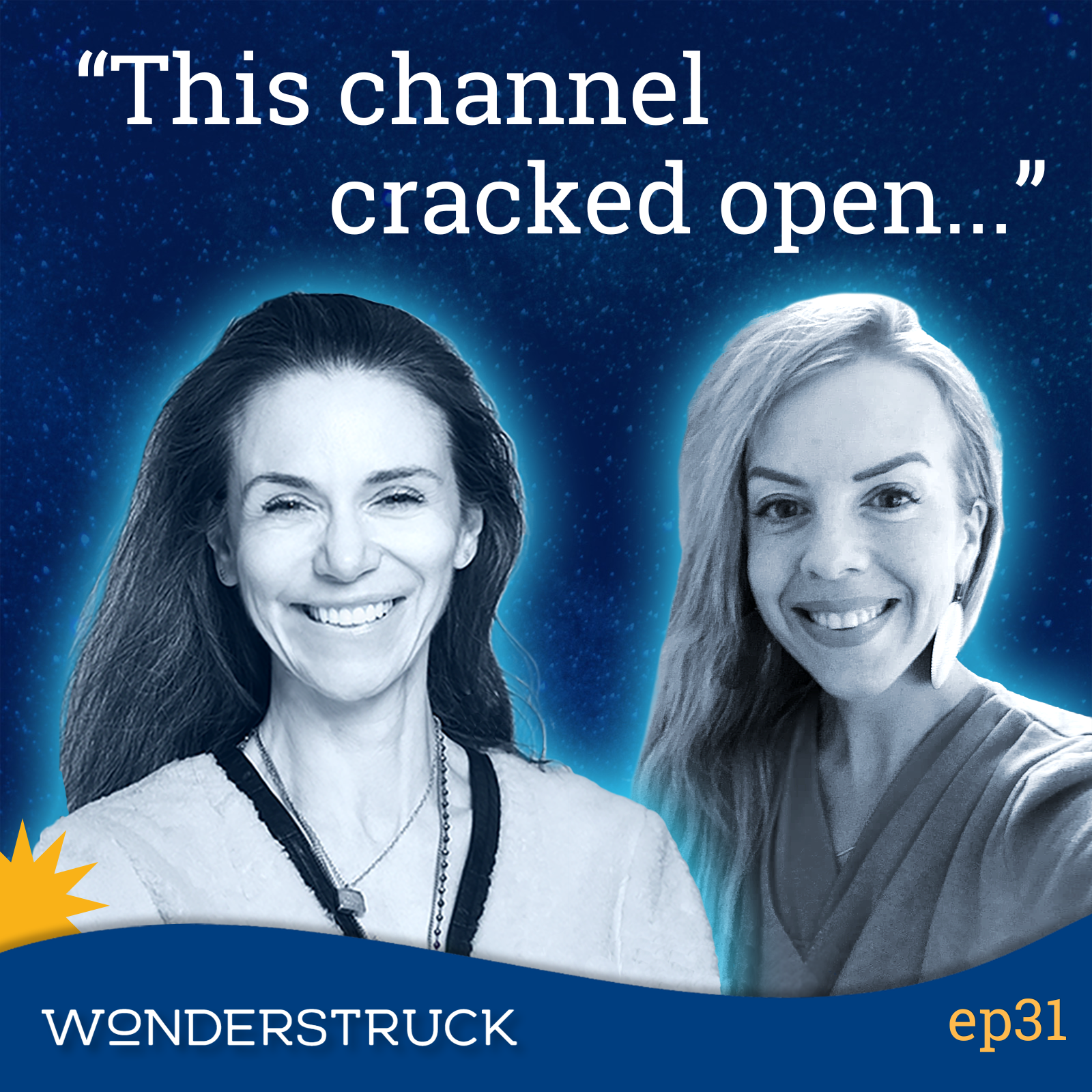
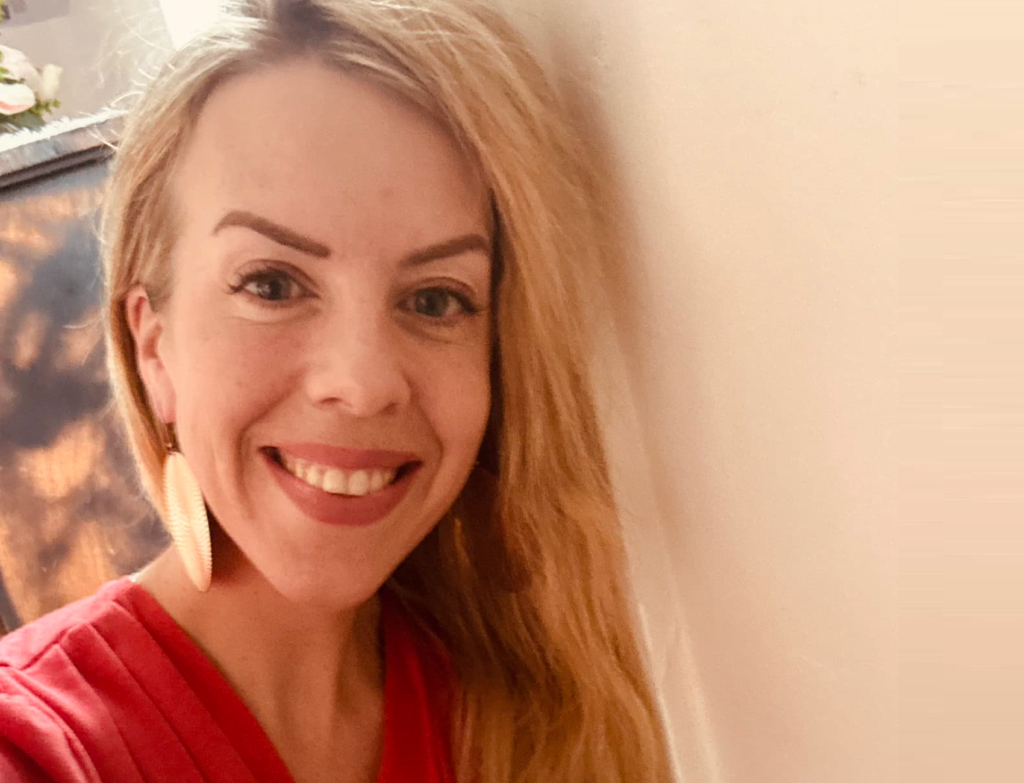
“The worst thing we ever did was put God in the sky out of reach, stripping the sacred from everywhere to put in a cloud man elsewhere.” Those are the words of Chelan Harkin, a poet whose work challenges us to rethink our relationship with the sacred, with prayer, and with suffering. She invites us to consider how prayer in any form can reconnect us to something greater than ourselves, and how participating fully in our lives is a spiritual practice. I’m your host, Elizabeth Rovere, a clinical psychologist, a yoga teacher, and a pilgrim in the realms of wonder and awe. This is Wonderstruck, a podcast about awe in all its forms. Today I have the pleasure of introducing a truly extraordinary poet, Chelan Harkin. Her work is likened to the mystical poets Rumi, Hafez, and Kahlil Gibran. And she became public, maybe like publicly known about 4 years ago, 4 years ago, I think, when her couple of poems that she put out that, you know, originally was just to your mom saying, “Oh, it’s really good.” And then all of a sudden, like, 2 of them went viral. So it was like 50,000 in about 2 days, which is just really profound. So Chelan has now published 4 books. Most recently this past year is The Prophetess. And I am so excited to welcome you to the podcast. Thank you so much for being here.
Chelan Harkin
Thank you, Elizabeth. It’s a joy.
Elizabeth Rovere
Wonderful. So I thought we would start out with something that I was thinking about. So you don’t have to convince me, no one has to convince me that poetry is a really important and good thing and meaningful in the world. And then I think of other folks, like initially my nephew who you met yesterday, who’s like, “Poetry? What do you mean you’re having a brunch on poetry? I haven’t read it since third grade.” and then he was completely enthralled. So I was curious if you had some thoughts on, you know, why do you think poetry is good? And why mystical poetry?
Chelan Harkin
So really all I can speak to, because it’s most intimate for me, is the power of what I call mystical poetry, which is more of an energetic transmission.
Elizabeth Rovere
Yes.
Chelan Harkin
More like energy work transferred to the reader, or to the reader, the listener, so that their energy channels are unlocked and opened as they experience it.
Elizabeth Rovere
No, I think that’s beautiful. It’s a beautiful answer that it evokes something or wakes something up.
Chelan Harkin
Yeah, and then also poetry can be a wonderful tool to get beneath. You can make profound statements about human nature or political statements even, or things that often would create resistance or pushback if not a certain type of poetic language was used. But it’s kind of like this tricky way to get beneath some of our… some of like the human armor, kind of sneaks into a deeper level and has this impact that isn’t somehow polarizing?
Elizabeth Rovere
Yeah, I think that it is inherently unifying in the way that it speaks to deeper truths. And, you know, there’s a— the poet Jorie Graham speaks about this. And when I read this, I first was like, oh, that’s true to my heart, that poetry is about uniting us to each other and to the planet and to the greater cosmos. It hits that place that’s, you know, deeper than rational thought.
Chelan Harkin
Yeah.
Elizabeth Rovere
You know, it hits the unconscious, it hits deeper than the unconscious, and it’s sort of like you said, it kind of sneaks in there.
Chelan Harkin
Yes.
Elizabeth Rovere
I know the poem that you read, that you wrote, The Worst Thing, I was wondering if you might read that for us because you sort of struggled with that at first, right?
Chelan Harkin
Yeah. Yeah, I did have to grapple with, do I have the right to make these claims or to say that? And it’s interesting. I think that those kinds of self-doubts can really limit artists of all kinds. And so that’s something I love advocating for, is just, you know, we all have the power and the right, as much as anyone does, to put our truth and our voice forth and our power forth. So this is called The Worst Thing. The worst thing we ever did was put God in the sky out of reach. Pulling the divinity from the leaf, sifting out the holy from our bones, insisting God isn’t bursting dazzlement through everything we’ve made a hard commitment to see as ordinary, stripping the sacred from everywhere to put in a cloud man elsewhere, prying closeness from your heart. The worst thing we ever did was take the dance and the song out of prayer, made it sit up straight and cross its legs, removed it of rejoicing, wiped clean its hip sway, its questions, its ecstatic yowl, its tears. The worst thing we ever did is pretend God isn’t the easiest thing in this universe, available to every soul in every breath.
Elizabeth Rovere
So beautiful.
Chelan Harkin
Thank you.
Elizabeth Rovere
I just, I love hearing that poem. The first time I read it, I just was like, that’s just so spot on. And where you talk about prying closeness from the heart, and I mean, I think that’s that is what it is. You know, that way in which, hey, you know, we are connected to each other. We’re connected to all of this. There’s this deeper space for everyone. And I partly feel like that’s why, you know, these are messages that we need to hear in the world today. The other thing about the aspect of the sacred, like taking the sacred out of the ordinary, or as if it’s only something that’s in church, as opposed to that which maybe we can experience every day. And, you know, I think that people might be really interested. I know you’ve talked about your journey a lot of times, but you’ve had such a fascinating experience as a person, as a poet. And like, there’s two questions. One is, you know, have you been writing poetry your whole life? Is it something that you knew that when you were a child that you were going to be doing or you were doing? And then, you know, you have— you found this incredible poem when you were 17 through your therapist at the time from Hafez, and then started your prayer experiment. And I’m just wondering if you could share a little bit of this, like your journey.
Chelan Harkin
Yeah, I’d love to. Yeah. So, um, as when I, I came into the world really, um, with this interesting clarity of like just without a doubt, we’re here to share our light with each other and celebrate each other and celebrate this existence and live our authentic love. And at night, before I would go to bed, my mom would ask if I had any— if I had any prayers to say. And I would just spin off like all these. And she would write some of them down, all these like kind of mystical prayers, you know, from a 2 or 3-year-old’s perspective. So that was kind of a part of me. And then I kind of buried that light and that expression intentionally, like tried to bury that alive for many years, which was a real enormous hazard for my wellness. Yeah.
Elizabeth Rovere
Intentionally? Interesting.
Chelan Harkin
Yeah. It was this feeling of like, oh God, this, this will be wounded if it’s exposed. And so my sort of soul’s recovery and my excavation of this poetic gift and love were really completely intertwined. And so my first, I didn’t know what mystical poetry was. I didn’t know what mysticism meant or anything like that. And then at age 17, I was in this therapy session and talk therapy. I hadn’t been exposed to any alternative types of therapy or somatic therapy or anything like that. So I kind of thought talk therapy was all there was to help me get to where I wanted to go. And it wasn’t really working for me. So I was feeling extremely hopeless. And after months working with this beautiful therapist and not getting too far, he thought to read me this Hafez poem. Yeah, called “You Don’t Have to Act Crazy Anymore.” And, um, just in that— it was a short poem, it’s— and it— but it had this unlocking effect like I was talking about. Like, it was this profound energetic transmission, yeah, that for that moment it somehow, in ways I didn’t understand, unlocked all this armor around my heart and being. And, um, in that unlocking, it was like my consciousness could connect with something that was real and true and alive and undamaged inside of myself. And that was the most profound experience I had known in my adolescent life. And it was a huge imprint. And there was this sense of whatever that poem was, I don’t know what kind of magic that just did, but I like, I need to do that. I need to be near that. I need to somehow recover and find that, that, and find that tool. And use it.
Elizabeth Rovere
I think that’s such a beautiful story because it’s exactly that example of where poetry cuts deeper to the core, or that Hafez poetry reached your suppressed poetry.
Chelan Harkin
Yes.
Elizabeth Rovere
You know? And there was this alignment that just like, poof, opened up that just sitting, not just sitting, I mean, I’m a therapist, but it’s true. Like, right? It just reaches deeper. And, you know, it speaks in a way that speaks the unspoken. I mean, wow. I mean, that’s great that your therapist even had the idea to like, okay, I think this might reach her, or I don’t know, who knows how that happened? Who knows?
Chelan Harkin
I’m so enormously grateful for that moment.
Elizabeth Rovere
Yeah.
Chelan Harkin
And also, as you say that, like realizing in that poem too, this can happen in these types of mystical poems, it both empathizes with the struggle deeply and it awakens the soul simultaneously somehow.
Elizabeth Rovere
And then you fell in love with Hafez a little bit?
Chelan Harkin
I fell in love with Hafez. I loved most profoundly the redefinition of God that that poetry offered, from something that was stern and distant and judgy and conditional to something that was available and playful and wholehearted and intimate. That was so— it would just put this life energy. It opened me. And I think that’s one of the most important gifts that I’ve received is that profound inspired imprint.
Elizabeth Rovere
Yeah, that’s— it makes me think about how poetry in this way is healing to an individual, but also healing to society because it speaks the truths that society has repressed or the globe. I mean, I’m talking about global society. You know, and I was, when I think about your poetry and how your poetry does this too, it’s like, you know, it was funny because I was writing, trying to write out my thoughts. And I was like, it’s not just like your poetry invokes vitality, you know?
Chelan Harkin
I’m so happy to hear that. Thank you.
Elizabeth Rovere
Yeah, you’re welcome. Yeah. Um, but it’s just like, you, you know, I think about like, you know, you’re— when someone’s healing or they’re not doing well, they lose their vital signs, right? It’s just like it’s an infusion in this way of life. I was thinking about this with healing and suffering and how, you know, just with the example of the Hafez poem, you demonstrate how that’s a part of your growth process and the path to starting to write poetry.
Chelan Harkin
Yeah.
Elizabeth Rovere
So I’m wondering if you could talk a little bit about that.
Chelan Harkin
Yeah, that is really the foundation of this writing journey for me, is finding new relationship, new way to relate to suffering. So, so, so at 17, there was this sort of pollination of this love for this style of poetry. And then at age 21, this channel cracked open through me and poetry began.
Elizabeth Rovere
Tell us about the channel cracking. I’m curious.
Chelan Harkin
I’d love to. It’s a good story. Yeah. So there was this knowing that I was— there was sort of a soul need to write and share poetry. And that, like, my— again, that it wasn’t a luxury, that my wellness, my happiness would be deeply impacted if I didn’t find a way to really open this up and bring this forward. But I had all of these really complex layers of perfectionism and self-doubt, and I needed encouragement. Anyway. So I— but I was stuck and so stopped up. And, um, but there was this, um, very powerful also drive to, to share poetry. So I recognized that I was just— I’d been so afraid of people’s judgment, writing bad poetry, writing poetry that people didn’t receive or value. And so, um, and that fear of doing something wrong, making a mistake, doing something bad, was really unconsciously driving my life in many ways.
Elizabeth Rovere
Yeah.
Chelan Harkin
Yeah. And so I was, I don’t know, inspired, really, it felt like, to just try this very intentional experiment where for 30 days I was going to intentionally allow myself, give myself full permission to write a bad poem every day and share it. And, um, and that just— it like, you know, it brought that huge obstacle, that huge fear from the unconscious shadows where those things that are resisted and held in the shadows, they really do drive and control our lives. And then bringing that up, it was— first of all, it was like so much energy was released because I wasn’t fighting against that anymore. I was working with it.
Elizabeth Rovere
Yes.
Chelan Harkin
And that huge force that had been this boulder on my— to my soul’s expression now became almost like fuel.
Elizabeth Rovere
Fascinating.
Chelan Harkin
Yeah. And so the second day of the experiment, I was sitting in the computer lab at Evergreen State College and I was sticking with my experiment. I set my timer for an hour. I was going to write my bad poem or whatever. And, you know, not that it had to be bad, but it could be, which just made me more open to myself. And this, this, it was, I had a characteristically completely new experience of the creative process. Just before, when I’d written, it had been kind of stressed and strained and tense shoulders, and it would take me months to stitch something together. And, and this poem came through just as quickly as I could write it. And it was the most revitalizing experience of my life. And it was as though I joined forces with something greater and more inspired than myself. And it’s like all my energy channels opened at once and I was in this complete harmony with myself and the muse and inspiration. And there wasn’t any doubt and there wasn’t any insecurity. And that was this channel that opened that hasn’t closed since.
Elizabeth Rovere
Quite amazing. Yes. And it’s that channel, part of the reason that the channel opened was because you gave yourself permission for it to be not good.
Chelan Harkin
Yes.
Elizabeth Rovere
Or like, I’m gonna write a bad poem, or it could be a bad poem. And let’s get into this mess and who cares. Yes. Kind of thing.
Chelan Harkin
Yes, totally.
Elizabeth Rovere
But something released in that process.
Chelan Harkin
Yeah, it did. And it taught me so much about just creating a safe, environment for our creative expression. And if we kind of externalize that, like, any one of us would feel so much more open and free if in a social environment we weren’t going to be judged and scorned and belittled and cast out if we made a mistake. Yeah. If we felt like we were, we would be scared. Yeah. And so it just— the, the, the relationship between creative expression and emotional safety is big.
Elizabeth Rovere
You know, it’s interesting. I feel like you make a really good point too, where that kind of like fear or, you know, holding back or pushing down, self-criticism, like how much energy that takes and how exhausting it is.
Chelan Harkin
Yes. Oh, it’s huge. This, we talked about, about this woman Anita Johnston yesterday, and in her book that inspired me so much also at this time in my life at age 21, this book of hers, Eating in the Light of the Moon, she describes that with the best metaphor of emotional repression being like having this big beach ball and being in a swimming pool and trying to hold it down and swim across the pool and you can’t let it up and still trying to have fun on top of that. And like, and then it flips out of the water and it goes all out of control and then you try to get it and push it down again. I mean, that would take all the joy out of the swimming experience. And I just think that’s the best metaphor because like, that’s how it feels. All of our otherwise joy and life force and energy that can be generative and creative just goes into holding those energies down. Yeah.
Elizabeth Rovere
Because you’re trying to fit into something that’s not necessarily you or you know, you’ve been told, or that kind of historical conditioning, whether it’s social or familiar or whatever it is.
Chelan Harkin
Yes, exactly.
Elizabeth Rovere
So we were talking about the poem that came through after you were doing your bad poetry experiment, which I think everybody who wants to write poetry could do, a bad poetry experiment. But go ahead, please, if you don’t mind, would you read the, the Say Wow poem, which was the one that just like blew up the internet?
Chelan Harkin
I’d be so happy to. Okay, Say Wow. Each day, before our surroundings become flat with familiarity and the shapes of our lives click into place, dimensionless and average as Tetris cubes, before hunger knocks from our bellies like a cantankerous old man, and the duties of the day stack up like dishes, and the architecture of our basic needs commissions all thought to construct the four-door sedan of safety. Before gravity clings to our skin like a cumbersome parasite and the colored dust of dreams sweeps itself obscure in the vacuum of reason. Each morning before we wrestle the world and our heart into the shape of our brain, look around and say wow. Feed yourself fire. Scoop up the day entire like a planet-sized bouquet of marvel sent by the universe directly into your arms and say wow. Break yourself down into the basic components of primitive awe and let the crescendo of each moment carbonate every capillary and say wow. Yes, before our poems become calloused with revision, let them shriek off the page of spontaneity. And before our metaphors get too regular, let the sun stay. A conflagration of homing pigeons that fights through fire each day to find us.
Elizabeth Rovere
Thank you.
Chelan Harkin
You’re welcome.
Elizabeth Rovere
I, you know, I have to say, I was, when you were talking about hunger, my stomach started rumbling. We have to leave, don’t cut that sound out. That’s funny. But also the idea of feeding yourself fire, that’s going to stay with me for a long time. So, and where does prayer fit into this aspect of the opening? How did that fit in with the context of the bad poetry writing experiment?
Chelan Harkin
Oh, good question. Prayer. I really, love the subject of prayer. And I never knew I would be saying that. There’s so many moments these days where I say things and I think about how my younger self would be like, wow, Chelan’s announcing that she loves the subject of prayer, huh? But so that hadn’t— my experiment and experience with authentic prayer, I like to call it, hadn’t kicked off at age 21 at all.
Elizabeth Rovere
Okay.
Chelan Harkin
So really that began— fast forward 12 years to when I was I was finally ready to publish my book. And I had, so this channel opened at age 21 and poetry just kept flowing through like that. And so I had a massive collection of poems, but I hadn’t moved forward at all, even the tiniest amount in like publishing those because I wanted a publishing house to just discover me somehow. I had this fairy godmother syndrome. You know, validate me and fly me to the highest heights and promote me without me having to do anything vulnerable or exposing or hard. So anyway, so that didn’t happen. And so, so like 12 years later, at the end of 2020, a lot of things were kind of breaking down and in that kind of this energy of like, what the hell, I might as well try to move forward with this, emerged just enough, barely enough confidence to take this step forward with publishing my book.
Elizabeth Rovere
Did you feel like, what do I have to lose?
Chelan Harkin
There was a little, it was a little bit of that, but I didn’t have any… Part of why I’d put it off for so long was it was such a great dream of mine. It was the deepest hope of my life life to be able to have my work received widely enough that I could, you know, justify financially and otherwise just really pouring myself into it. And so it felt like it would be a big loss, you know, if that didn’t happen. But I needed to confront that. And but at the time, like you said, it was really just my mom and her 2 or 3 close friends that were my, my platform. And grateful to them. They gave me a lot of encouragement. But, but I didn’t have any marketing support or any connections in the publishing world or any platform at all. And, and I committed to publishing this book. And I actually— what happened was I bought some Hafez books because I had decided to self-publish this book, and I didn’t know how to do that. My technical skills are low. And so I needed to learn about formatting, all these things. So I wanted— I remembered the formatting of the Hafez books was beautiful, and I wanted to—
Elizabeth Rovere
this is the Daniel Ladinsky?
Chelan Harkin
The Daniel Ladinsky Hafez books, yeah. And so I was gonna just emulate that form, that format. So I bought these books and I opened them, and I was amazed at how inspired I was again. And in that moment of reading this first Hafez poem, I had this again. I’ve only really had this twice. One was with the bad poem experiment impulse. That was something it was like I couldn’t cast out as just a passing thought. It was something that I had to do. And in this moment too, there was a similar thing, and it was I need to experiment with asking my favorite dead poets, Hafez included, for marketing support with this book.
Elizabeth Rovere
You said it felt like it was something that you had to do. You just felt something. You felt it. It gives an embodied sense and awareness.
Chelan Harkin
Yeah. Maybe I could describe it as like if I didn’t do it, if I didn’t listen to it, it wouldn’t go away.
Chelan Harkin
And it would get louder and more obnoxious, almost.
Elizabeth Rovere
Fascinating.
Chelan Harkin
Or uncomfortable. Yeah. So, yeah. So every night before, it was like 2 weeks before the book was published, I’d put my kids to bed and I would go on a walk around my block And just really, and it was vulnerable. It was a little awkward. It was, a lot of me was like, you look crazy, Chelan. Like I would walk around my block talking to my favorite dead poets. So there was a little group of them and the chairmen were Hafez and Kahlil Gibran.
Elizabeth Rovere
Yeah.
Chelan Harkin
Yeah. And, but it became, I started to really look forward to it. And I just would say in the name of love and truth and liberation for, you know, as many people as this would really reach and support. Like, please somehow tap all of the marketing execs behind the veil and anyone in this world who can help and let’s get this show going. And I would start to get energized and I loved it.
Elizabeth Rovere
Oh, that’s cool.
Chelan Harkin
Yes. And also this was— gave me some empowerment to keep doing it is that as soon as I began this experiment, what had been a steady trickle of inspiration became absolutely torrential and an inconvenience to my life. So it’s— And about a third of the book, of the poems in Susceptible to Light, that first book that went out, came through in those two weeks. Oh, fascinating. And so the book was going to be at least a third shorter. And yeah, and they— so many of them had this wild tone of this sort of signature of Hafez energy that was wild. So yeah, so that was—
Elizabeth Rovere
Well, and then you ended up getting an email, or you— yeah, you got an email from Daniel Ladinsky, right?
Chelan Harkin
That’s the only reason I have any confidence to share about this wacky experience publicly is because it’s had such astonishing results. Yeah, you know. So about 2 weeks into the publishing of this book, yeah, I got an email in my inbox out of the— completely out of the blue from Daniel Ladinsky, the renderer of Hafez poetry, right? And he said Hi, Chelan. I’m Daniel Ladinsky. I don’t know if you know who I am. I was like, oh my God. That moment is so vivid in my being. It was completely— I describe as the cork coming out of existence and just part of me just becoming intoxicated forevermore. And that’s incredible. I don’t know if you know who I am. I’ve done the renderings of Hafez’s poetry that have made him something of a superstar to the Western world. I’m a reclusive poet in Taos, and I tend to not reach out to anybody, but I saw your book on Amazon, and I had this strange nudge to reach out to you and say congratulations. And so that was— and then I responded to him with all of these— I think I used a few expletives. I was just so overwhelmed, and I told him the whole story. And I mean, it was totally—
Elizabeth Rovere
Did you tell him about walking around talking to the dead poets?
Chelan Harkin
Yes. My response to him was the most over-the-top response. And I shared with him some of the poems that had come through. And then, you know, half an hour later it was like, oh my, what did I just do? Why did I send him that email? It was so unhinged almost. But then he wrote back to me and said, well, Chelan, now I see why I reached out to you. I’ve been looking for a poet to co-author a book with. You’re the one. Let’s go.
Elizabeth Rovere
I think that’s just awesome.
Chelan Harkin
It’s just, it was so beyond wild.
Elizabeth Rovere
And didn’t he or you or someone said that Hafez was kind of like doing, like working behind the scenes and connecting you and nudging you and nudging him. And it was just, I just love that. ‘Cause so I mean, for everyone to know, Hafez is a 14th century Persian mystical poet.
Chelan Harkin
Yes, exactly. And then it turns out Daniel Ladinsky also wrote the foreword to the extended edition of The Prophet by Kahlil Gibran, who was the other person on my A-team. Yeah. And then Daniel went ahead and, I mean, in like hyperbolic poetic language, endorsed me to all the major publishing houses of the world. And he completely initiated that.
Elizabeth Rovere
Wonderful. And now you have 4 books published.
Chelan Harkin
Now I have 4 books published. And then, and then that really anchored in my like, oh my God, it’s really worthwhile to continue, with more energy, this experiment with prayer. And it was just like, oh my God, can it really be real?
Elizabeth Rovere
Yeah.
Chelan Harkin
That we’re so interconnected and that our intentions and our words can activate this network of possibility that opens doors that just by all kind of rational understanding really couldn’t be opened otherwise.
Elizabeth Rovere
Yeah, you know, I have so many like associations and thoughts as you’re speaking, and I, gosh, I feel like I’ve— I mean, so one is that, you know, so that network of associations, right, and the prayer.
Chelan Harkin
Yeah.
Elizabeth Rovere
And like Hafez popping in and I was thinking about the way that you described your prayer as well. It was kind of like this joyful, fun prayer. And it was also, you said, you know, may I do this to be in service of like sharing this with people, to help people, right? So it was like, it was service-oriented. It wasn’t like, can you please, I mean, I don’t think, can you please make me super important and famous and blah, blah, blah. It was like, so that I can do this because I feel like it’s my life’s purpose and because I want it to reach people and hopefully help people, right? So there was that aspect to it. And then I also think of, you know, on the one hand, I was like, okay, wait, so Daniel Ladinsky is kind of like the fairy godmother, but not. And like, how do we find like the sense of balance in this? Right? And so one step further, bear with me, is that then like, okay, so prayer, I think you’ve talked about being afraid to pray. I think we’re all afraid to pray. I think we’re, I could just speak for myself, like, I’m afraid to pray and not be answered, but I’m afraid to pray and be answered.
Chelan Harkin
Oh yes, good point.
Elizabeth Rovere
And what happens when it doesn’t get answered? And then what do we do with all this?
Chelan Harkin
I love this. Yes. Yeah. Well, you touched on so many rich things in that. So like, yeah, this, this was also a real educator for me about like authentic service, I guess, because I had had a model of like, oh, just have to, you know, I think this is a pretty common one. Just have to give whether or not I’m in alignment with that giving.
Elizabeth Rovere
Right.
Chelan Harkin
You know, whether or not it also serves the fountain of my energy that can then keep expanding and growing.
Elizabeth Rovere
Exactly.
Chelan Harkin
I need to be depleted and give. And that makes me good.
Elizabeth Rovere
Right.
Chelan Harkin
And so, yeah. Good point. Or the, or the I want to be rich and famous, the flip side of that.
Elizabeth Rovere
Yeah, and not give anything to anybody. No, no, I’m just kidding.
Chelan Harkin
Forget everyone else. So this was this real experience of, of genuinely feeling like I want this fully for my, for myself and for everyone. And they’re one in the same. Oh, I like that. In this kind of alignment space. Um, yeah. And so then, yeah, and I mean, I’m still scared after all of this, like, great feedback. It’s still scary to pray these authentic prayers. That it’s really vulnerable.
Elizabeth Rovere
Yeah.
Chelan Harkin
To even admit to ourself, which is maybe the same thing you could say as admitting it to the great all, but what we really desire. And, um, and then there’s something about speaking it too, that really makes us conscious about it. I mean, we can sort of unconsciously ruminate about it, but it can sort of still, we’re still at a little bit of a safe distance in that. And when we speak it, and it also affirms the possibility of our power to us, and that can be threatening too. And so it’s a big thing to say these authentic prayers. And it still, it freaks me out. It still freaks me out in the best of ways, but like, all that has opened from this experiment. Because I haven’t done this all that much. And just all that has emerged from this, this bit of—
Elizabeth Rovere
It’s been fast.
Chelan Harkin
It’s been fast and big. I do think this sort of exploration, excavation of self-knowledge so that, so that we’re in alignment with what’s most true inside of us. And then this willingness too to burn through the limiting thoughts and limiting emotions has been part of what has opened this up. And then, and also then the willingness to act or to ask, and then the willingness to act too. And then I do feel like, like you said, the fairy godmother comes in or it, there’s this relationship where the universe does come in and it’s almost like riding an e-bike or something. You put, you have to put in the effort for the extra force. Oh yeah, to help you. Yeah, that’s great. That’s a great analogy. It has to be an active thing or else it doesn’t move at all. Or like catching a wave, a good surfing wave or something. I feel like when the universe has its hand in it, just taught me so much about the principles of the universe. It is not a scarce withholding place. Like it is so generous and it wants us to receive.
Elizabeth Rovere
Yes, prayer in that way has such a sense of intimacy. So I kind of like that you’re like, okay, I’m gonna do it and I feel kind of silly and I’m bringing levity to it ’cause the intimacy is intense. And then it also, that it doesn’t mean that you should just pray and that it’s like all of a sudden it will just come to you. And it made me think of this Sufi parable or saying, which is like, if you’re climbing a mountain and there’s like a rock, a big boulder falling at you, pray, but can you please also move out of the way? You know?
Chelan Harkin
Yes. Yeah. So I like that you said that because there’s this idea, you know, people are annoyed for great reason with, you know, something horrible, something catastrophic happening in the world. And then people saying prayer, you have, you know, you have my prayers or whatever, because that’s been a pretty empty, It seemed like a pretty empty thing. But for prayer to be this way of, yeah, like activating inspired, both inspired action and then opening possibilities that then we still have to choose to walk through in a way that we do have to put our neck out to do that.
Elizabeth Rovere
Yeah.
Chelan Harkin
Because then we have to encounter all the reasons we haven’t lived in a fuller way in the past, which brings up all of our obstacles too. In that there can be sometimes quite a bit of suffering in that process and opening. Yes. So that’s important to say. Like, this has been— I’ve been— this has been the dream of dreams deluxe the last 4 years, and it’s been the most extreme encountering of the suffering, because to receive it and open to it, I’ve needed to confront and move through all of these old, a lot of old models.
Elizabeth Rovere
So I wanted to touch on that briefly again and then talk about The Prophetess, because in The Prophetess you tell us that suffering is sacred. And maybe if you would read the— I’ll give you, well, your choice of two suffering poems.
Chelan Harkin
Excellent.
Elizabeth Rovere
One is Thanks to Suffering and one is Our Great Cocoon. If you might read and then we could even possibly elaborate, and then I’d really like to talk kind of about The Prophetess.
Chelan Harkin
Great. Um, okay, I’ll read Our Great Cocoon.
Elizabeth Rovere
Okay.
Chelan Harkin
Okay, sweet. Our Great Cocoon. Suffering is our great cocoon. Your budding wings might not be ready for you to fully emerge in your lifetime, but tending to this sacred process of no longer repressing or projecting your sorrow, but letting it transform you as it’s intended, is still profoundly noble and meaningful work. Stay strong, dear one. Whether or not you taste the sky, you are building the future of humanity’s wings.
Elizabeth Rovere
So just so you know, when you read that, like, I can feel it.
Chelan Harkin
I so appreciate that because suffering can be such a lonely journey.
Elizabeth Rovere
Yeah.
Chelan Harkin
And so to get the feedback that that has been turned into something that can reach people meaningfully and do something beautiful just means so much.
Elizabeth Rovere
Because it’s so meaningful when you hit that place, right. And nobody, nobody wants to be in suffering.
Chelan Harkin
Right.
Elizabeth Rovere
And yet, you know, unfortunately, it’s part of human life. So it’s the alchemy of it is just marvelous. And I was wondering if you could share with us a little bit about, you know, what is The Prophetess and how did this unfold? And, you know, The Prophet was Kahlil Gibran, and then there’s this beautiful quote in The Prophet about the next step is the voice of a woman. And anyway, I thought you would just tell us the story of how this came to be and the call.
Chelan Harkin
Definitely. Yeah. So this has just been the most extraordinary journey. I think it was two Septembers ago. I can’t remember. Time is a little slippery these days. I just put my kids to bed. It was just a very humdrum kind of ordinary domestic moment. I think I was running a bath or something and just got sort of this lightning bolt almost of energy. That came through me and an energy. You know, when a poem comes, it’s this energy that I— it’s almost like this. I just— it’s like I translate it into the poem that it wants to be.
Elizabeth Rovere
Yeah.
Chelan Harkin
And so in this moment, it was like that, but the voltage was way higher than ever before. But again, it was like something activated and open and unlocked and it translated to say, It’s time to write The Prophetess and you’re the one to do it and like, go. Yeah, and then I just like turned off the bath, like ran and got a notebook and wrote basically 4 chapters, like the core of 4 of the chapters that night. Yeah, and it was just started streaming and it really felt like it was time and it was irrepressible. There was no way this book wasn’t gonna be written. And then in 2 months, I had all the content for the book. It was done. It needed to be—
Elizabeth Rovere
Wow.
Chelan Harkin
Like, organized. Yeah, basically. But I had all the content. So much came through that first night where I really was like, oh my God, I’m really going to do this. I’m going to take this as far as it can go. And my commitment in that moment, because I had such amazing respect for Khalil Gibran and the book The Prophet, And I said to him, I said, I promise this book will 100% be written in a flow and joy, and not one word of it will be forced or a filler or coming from that place. Like, this is meant to be done in complete ease and joy. And it completely was, 100% of the process. Yeah. And then I reached out to one of the publishing houses that Daniel had connected me with, and they basically accepted it almost immediately, which was unusual. And then as soon as the manuscript was done and I turned it in, Penguin Random House bought that publishing house.
Elizabeth Rovere
Oh, wow.
Chelan Harkin
Yeah. Which is amazing because they also carried The Prophet. Yeah. And—
Elizabeth Rovere
Cool.
Chelan Harkin
Yeah, and The Prophet had just come out, come into the public domain. It was almost like it had done its time and now it was just delivered to the world to be used. So we could use quotes from it on the cover without needing permission or whatever.
Elizabeth Rovere
Fantastic. And it was also, wasn’t it the 100-year anniversary of The Prophet as well?
Chelan Harkin
Yes, I signed the contract on the 100-year anniversary of The Prophet, of The Prophet being published, which was wild. And then while I was writing this book, I didn’t actually, I didn’t read The Prophet at all because I didn’t want to, I don’t know. I didn’t want to compare this book to that or try for it to try to be like that. But when I had turned in the manuscript, I did read it. And the last chapter, which I had completely forgotten, it had been years since I’d read that book. It’s all a prophecy about the return of the inspiration that had moved him. And the last line of the book is, “A little while, a moment of rest upon the wind, and another woman shall bear me.” It’s incredible. Which was just So cool. So, so many wild, wild happenings on this journey.
Elizabeth Rovere
Tell us more about like the other part of like how you met the nephew.
Chelan Harkin
Great nephew.
Elizabeth Rovere
Great nephew. Okay.
Chelan Harkin
So this— I just— when you asked that, I just felt full body shivers again and I— God. So this element, it was like as if enough hasn’t occurred. I think it’s going to keep happening. The universe knows how, like, part of me still just is hardheaded. And so, but all of that hardheadedness is just being absolutely demolished bit by bit. But so yeah, in January I gave an online course on manifestation, sharing a lot of these principles. And there were 4 people from Hawaii, the Big Island, that showed up. And invited me to visit them.
Elizabeth Rovere
Nice.
Chelan Harkin
One said, come to Hawaii. One said, come swim with whales in Hawaii. Ooh. One said, come build your retreat center on our land in Hawaii. Wow. And the fourth one said, come meet Hajjar Gibran, Khalil’s great nephew who lives right down the street from me. He’s a good friend and he’d love to meet you. And it was that one that I was like, are you kidding me? And I mean, just that that happened at a manifestation course was, other— it was almost absurdism. It’s absurdism. It was absurd. It’s great. Yeah. So then I bought my tickets the next week and stayed with Hajjar Gibran. So Hajjar, Khalil Gibran’s great-nephew, who I didn’t know existed, has also written a contemporary continuation of The Prophet, had a life-changing mystical experience with his great-uncle Khalil, and also, like me, worked for many years as a hypnotherapist.
Elizabeth Rovere
Oh my gosh.
Chelan Harkin
And has land.
Elizabeth Rovere
Synchronicity.
Chelan Harkin
Yes. And has land in Hawaii that we’re exploring now, building together the Gibran Center, a temple for awakening.
Elizabeth Rovere
Oh, wow.
Chelan Harkin
On the— so, yeah.
Elizabeth Rovere
So you’re actively building this Gibran Center.
Chelan Harkin
Well, that was one of the purposes of the visit was to really talk with him about that. So he’s designing. So he also, as it should happen, has an amazing organization, amazing inspired organization called Dome Gaia, where he just cares about empowering people to learn how to build these both affordable and extraordinary living spaces.
Elizabeth Rovere
Fantastic.
Chelan Harkin
So he is currently designing the Gibran Temple Center for Awakening where we’ll host all kinds of fantastic, meaningful things. It’s just beyond belief, this one.
Elizabeth Rovere
It’s just yet another synchronicity.
Chelan Harkin
It’s another synchronicity. And also he and I, this was almost the most amazing thing because honestly, like, it’s been hard for me to find deep, deep belonging in this world, in my social spaces.
Elizabeth Rovere
Yeah.
Chelan Harkin
And, um, well, this poem is called The Great Cocoon, and I do feel like the last 4 years have been something of a cocoon. And then the last few months I’ve been kind of breaking out of it.
Elizabeth Rovere
Yes.
Chelan Harkin
And I feel like I’ve been, um, connecting with, like, with butterfly people who have been through this journey and are… It’s fantastic. Yeah. And so Hajar was one of these souls, and we just, we met for the first time, and it felt like we’ve known each other for eternity.
Elizabeth Rovere
I wanted to kind of go into the darker side or the shadow. And there’s just— you’ve written some things about, you know, anger and death and the shadows in The Prophetess. And, you know, I think it’s important, you know, it’s so many of the things that you’ve described also are sort of certainly awesome. And we have talked about some scary things too. But there’s— I wanted first to talk about death, anger, and the shadows. Yes. And then also ask you about awe and the way that it can sometimes feel scary. Like, I don’t know, is it scary to feel like a lightning bolt is going through your body?
Chelan Harkin
Yes. Good question. I’ve been scared since the beginning of this amazing force that’s that started with this poem, “Say Wow,” that moved through me at age 21 on the heels of the bad poem experiment. In love with it and scared of it, both. Completely enamored with it and scared. And so it would come through me. I’d write it, I’d write the poem, I’d share it, and then it was almost like I would kind of go hide a little bit or contract or, I was like, it had done its thing. I’d given it away, and then I would go away from it. And then there was something about, yeah, getting this book, this box of books of the Prophetess, and also listening to the audiobook where it was, there was a bit of a holy shit, like, whoa. Like there was a realization of, yeah, this has been too big for me to hold. I’ve been scared of it. The puny, you know, the small, parts of my being, the parts that are really kind of addicted to being small, have been really threatened by this.
Elizabeth Rovere
That’s actually really cool, um, because you have that— I, I really liked that poem that you wrote, um, God’s Mule, which is also, I think, kind of playful and fun. And when you just said this thing about feeling addicted to being small, it made me think of that, you know, that way in which you know, that’s that profound conditioning of what you’re supposed to do and should do.
Chelan Harkin
Yeah.
Elizabeth Rovere
So I do want you— would love it if you would read that poem.
Chelan Harkin
Absolutely. Okay. God’s Mule. Each poem tries to smuggle a bundle of God into your heart. If it’s good, tucked away just right, the security officers in your mind won’t catch it. If they do, they might try to send it back. This stuff will mess up our rules and our sense of order, they outcry. They’ll make a great fuss and have this light confiscated and quarantined to the small box of their judgments. I used to hold back, scared of being sniffed out, but now I deal to anyone even remotely interested in the sweetest, sweetest hit of the remembrance of home.
Elizabeth Rovere
It’s beautiful.
Chelan Harkin
Thanks.
Elizabeth Rovere
Kind of goes back to that, what are we— why are we here, you know? What are we supposed to be doing here? We’re not supposed to be hiding out from ourselves, right? And, you know, you talk about that in The Prophetess. You say we are here to touch the tender cheek of reality, like to fully participate in our lives, to be in true contact with reality.
Chelan Harkin
Yeah.
Elizabeth Rovere
Is that what you mean by reality? This place? This place of, of seeing and being in a more full-hearted, poetic, open, yes, terrifying way?
Chelan Harkin
Yeah, I would say what I mean by it is, um, creating an environment in ourself in which we’re animated by life with a with a capital L. Yeah. Um, which actually, anyway, Khalil Gibran also talks about life with a capital L, which is why he’s like, didn’t reread his book at all. Anyway, and so do I in The Prophetess. Just an interesting thing. Um, but yeah, so being animated by, I guess you could call the, the will of life, but, and then realizing, oh my God, that’s actually intimately connected with my highest, most satisfied joy. But rather than than our lives being moved from this forced place of our conditioned ideas about how we should be and the limited ways of separated, limited ways of who we think we are.
Elizabeth Rovere
Mm-hmm. Yeah, I have like, yeah, that’s so interesting. I have two thoughts on that. One is that my eyes went to, what you wrote about death and The Prophetess that I wrote down. And you said, “For we hold fear to protect us from death, though with it we ward off life.” And I think that’s so poignant. And it made me, I forget now, it’s like someone famous, this is a line from someone famous, but it was in a play and the main actor is depressed and he walks around and they’re like, “Oh, you’re gonna kill yourself?” And he’s like, He’s like, why waste a bullet on a corpse?
Chelan Harkin
Oh, wow.
Elizabeth Rovere
But, you know, this way in which—
Chelan Harkin
Yes.
Elizabeth Rovere
What does it really mean to be alive?
Chelan Harkin
Mm-hmm. Totally. And then there’s a lot of, like, spiritual rhetoric about love and fear are separate. And if you have fear, then you’re not being loving. Or like, that could make it sound like what we should do is actually reject our fear. And that’s not what I mean. What I mean is that we need to go into those fears, bring consciousness into the body and meet that rather than act it out, rather than have it drive us for the rest of our days, which is what it does when it’s unconscious. And when we’re afraid of it, when we’re judging it is when we keep it unconscious. And we need to meet that energy ’cause all of this suffering that we’ve labeled and judged and been terrified of, It, when it acts out unconsciously again, it can wreak all kinds of horrific havoc. But when it’s met with the loving energy of consciousness, it becomes, any energy becomes an extraordinary ally to our transformation. It isn’t anger, rage, terror, whatever. It’s not bad. It’s revitalizing and it doesn’t have to do any harm when we receive it rather than resist or react from it.
Elizabeth Rovere
See it, receive it, and meet it.
Elizabeth Rovere
Yes. And it alchemizes. That’s like, yeah, you say that too about anger. It’s a life force. Okay. Underscore life force that moves through us. And if you bottle it.
Chelan Harkin
Yes.
Elizabeth Rovere
Again, the same beach ball analogy of how exhausting that is. Yes. But you don’t want to, like, act it out either.
Chelan Harkin
No, you don’t want to act it out either. We need to learn how to meet it. And just in meeting it with the presence of consciousness, it’s transformed into a whole new life-serving creative force.
Elizabeth Rovere
Yeah, beautifully said. So beautifully said. It’s like you have also in The Prophetess, “the moon would be much less alluring if she only knew the luminous side of her wholeness.”
Chelan Harkin
Yeah.
Elizabeth Rovere
But I think that’s what you’re saying.
Chelan Harkin
Absolutely. That there’s a beautiful gift in these shadows and also in, you know, and I say I make it sound easy almost, and I want to be careful not to. Like, it is what we need to be learning. When we’re not doing that, we’re separated from life force itself and we feel scarce and we act like idiots. But so that’s really important that we learn how to do that. But often we need support. We need— we need our light that goes in to meet the shadow needs to be bigger than the shadow. And, and so often we need to call other people. Into the sacred process of alchemizing that. And that is such an honor and a gift. And that’s how we find intimacy and connection and true service and true love for each other. And so, and without the shadow, we wouldn’t need each other as much, but we’re each other’s midwives of our awakening.
Elizabeth Rovere
Yeah, that’s really beautiful. I love how you just explored and said that. It’s really meaningful. And it’s so important because I think, you know, we do need support. And when you talk about it with those moments of authenticity with other people, and I also think of those moments of support with, you know, your dead poets or, you know, the life force of God or nature, that… engaging that and being open to that so you don’t feel alone with it, that’s the disaster.
Chelan Harkin
Yes, that’s true. And I want to say also, because a lot of my journey, I have gotten a lot of support from in this alchemizing process, largely from fantastic therapists, but also prayer as a tool to bring more light in, like asking for that. That’s one of my— currently one of the main prayers that I say is I ask for more light to come in so that I have the resilience and resources to actually alchemize blocked energy that I’m scared of.
Elizabeth Rovere
Exactly. Yeah, it’s really cool.
Chelan Harkin
And so if we don’t have a lot of people, which a lot of us don’t, who we can feel vulnerable being like, hey, I need to alchemize some stuff, want to come over and help me? We— that is a— that is a resource we can experiment with.
Elizabeth Rovere
Yeah, that’s exactly great. The thing I wanted to ask is that in your acknowledgments in The Prophetess, you have certain people inspired you, like Elizabeth Gilbert or Brené Brown, Alanis Morissette. And you also have J.B. Smoove. So I’m wanting to invoke J.B. Smoove because I adore him as well. He’s a comedian. He’s Leon Black in Curb Your Enthusiasm. So please do share how he is a source of inspiration to you.
Chelan Harkin
Oh my God. Well, I just, I think he is dead hilarious. Like, he is such a one-of-a-kind character. And I’ve just had some of the best laughs of my life about him. So, and the— there’s one illustration in The Prophetess done by a man named Thomas Stern, and he and I, we watched some Curb Your Enthusiasm together and just like died laughing about Leon. And I— so, you know, anything that evokes great laughter deserves a nod. But I also liked just I think it was sort of too, just a personal, amusing inside joke almost of the funny irreverence of him specifically being acknowledged in the dedications of The Prophetess.
Elizabeth Rovere
Yeah, well, it’s great. It brings in some levity. It’s like, come on, we’re talking about some heavy stuff. We’ve got to laugh.
Chelan Harkin
Well, that was our first conversation yesterday. That was like, that’s just like the best.
Elizabeth Rovere
I was just like, I love that. I was like, oh, I’m gonna really like her.
Chelan Harkin
I knew everything was gonna go fantastically as soon as you mentioned it, invoked Leon.
Elizabeth Rovere
What stayed with me after talking to Chelan was how mystical poetry can open us to a more expansive present moment, a widening of reality. Her poetry is revitalizing. It awakens to life with a capital L. If you enjoyed this episode and you think somebody else might too, Please rate the show and send the link to a friend. We’d really love to hear what resonated with you, so please do drop us a comment. Follow us on Instagram @wonderstruckpod and subscribe to us on YouTube and your favorite podcast player. And visit wonderstruck.org for more on our guests and upcoming events. Wonderstruck is produced by Nastasya Gecim and edited by Niall Kenny at Striking Wonder Productions with support from the team at Baillie Newman. Special thanks to Brian O’Kelley, Eliana Eleftheriou, and Travis Reece. And remember, stay open to the wonder in your life